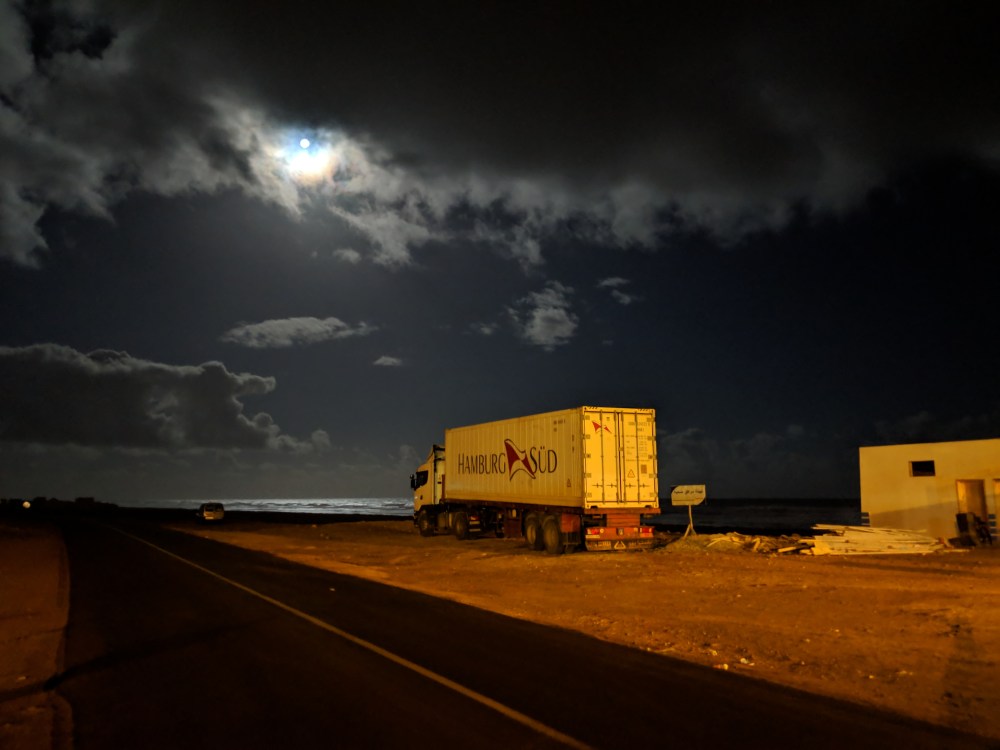
I noticed it around 6am, where we stopped for morning tea. Silver ocean under full moon. Sand. A truck on the side of the road.
The plants were gone. We were moving among nothingness, sand, gravel, all gray and silent.
Then at 8am a police checkpoint. Sir, what’s your nationality? What’s your profession? Where are you going? Where will you stay? Please wait. 20mins gone with my passport. Big red flag flapping in the wind, asserting the authority.
We entered Western Sahara but don’t call it that, for these are Southern Provinces of Morocco and if police thinks you’re a journalist, you will be returned.
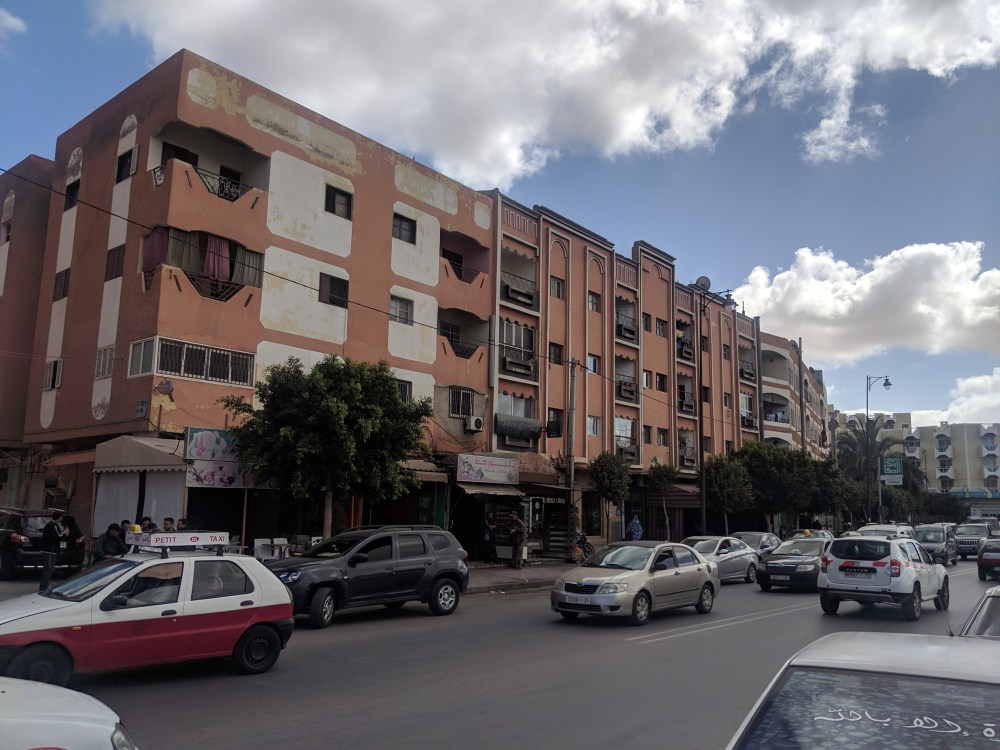
We arrived in Laayoune 1hr late. I took taxi to a hotel. Small, cheapish (70Dh) with shower paid extra 10Dh. The town seemed quiet, all buildings in brown-red-sand flavours, paled by the sun. It was quite chilly.
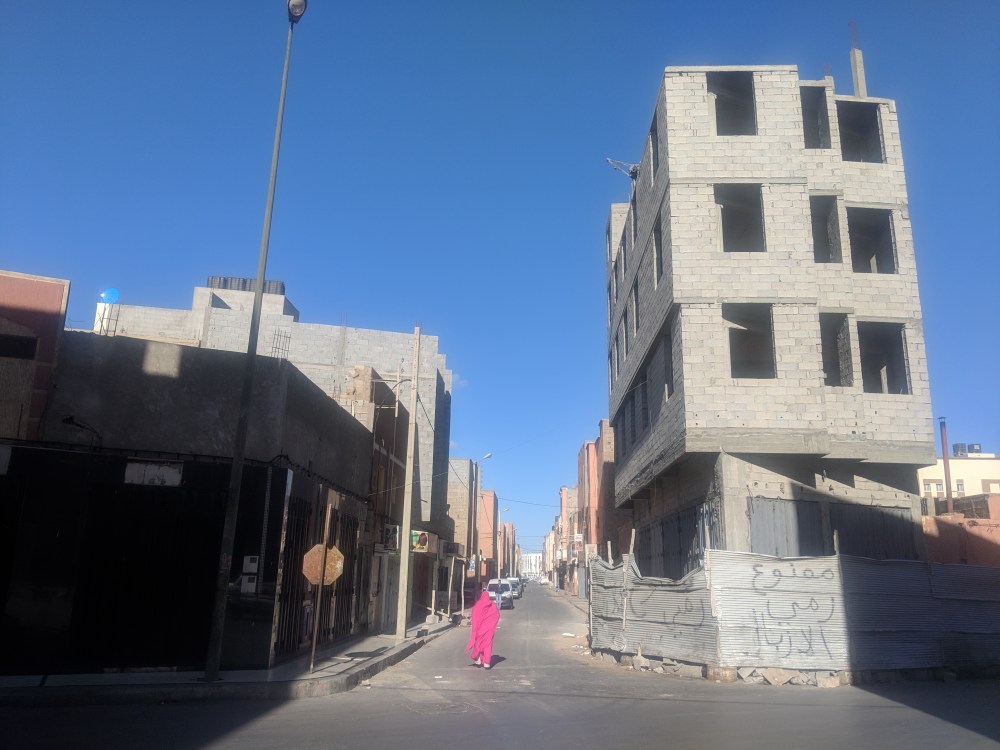
It’s a forgotten part of the world but it has MacDonald’s!
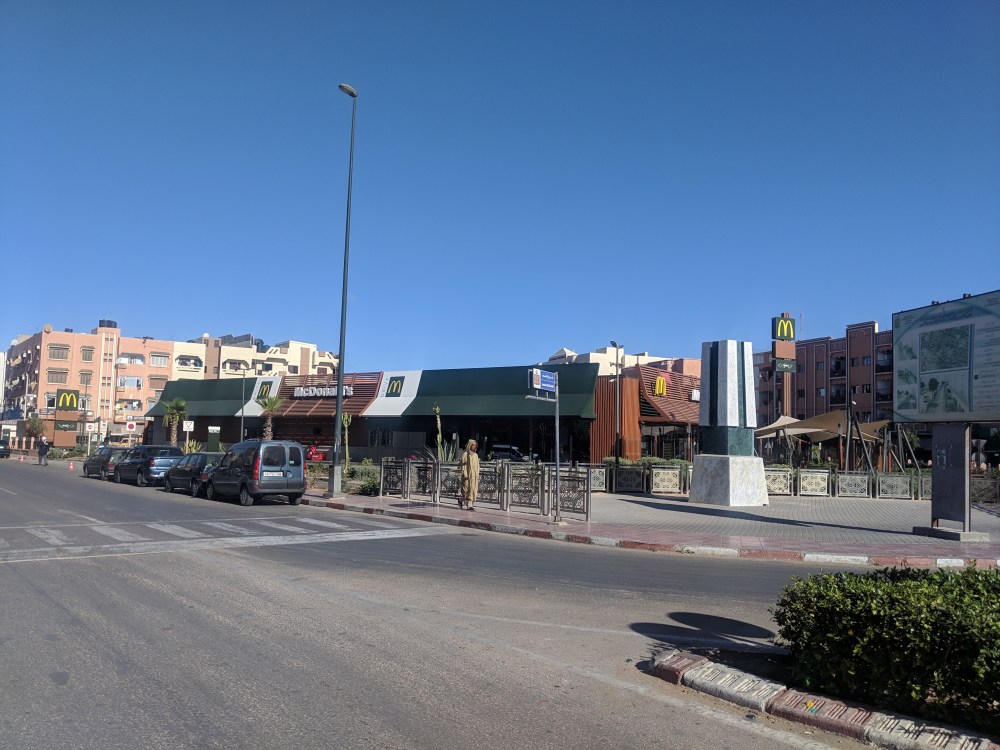
I took coffee, and yet another coffee and went for a walk. Pavements seem to be under construction, of perhaps permanent type. Women cover their faces but some wear fabulous colours. The main square is closed off the public. Around town hall there are streets cordoned off and there is a lot of police. There is a cathedral. I took another coffee. I looked at remote dunes across a seasonal river that looked now a bit like a marshy pond. The wind was strong. I don’t know which language I should use. This used to be Spanish colony but now Morocco sends its settlers to overcome independence tendencies. The taxi driver was speaking Spanish to me when I asked questions in French. The hotel receptionist spoke English to me. Waiters in the bars told me prices in Spanish.
There isn’t much to do Laayoune. With so much time on my hands I decided to go to a place called Laayoune Plage, which in fact is a port. I went to a grand taxi stop and for 9Dh we set off. The wind was strong, the sand is blown on the road, there are signs warning against sand on the road, it was quite a picturesque road with dunes on each side of the road.
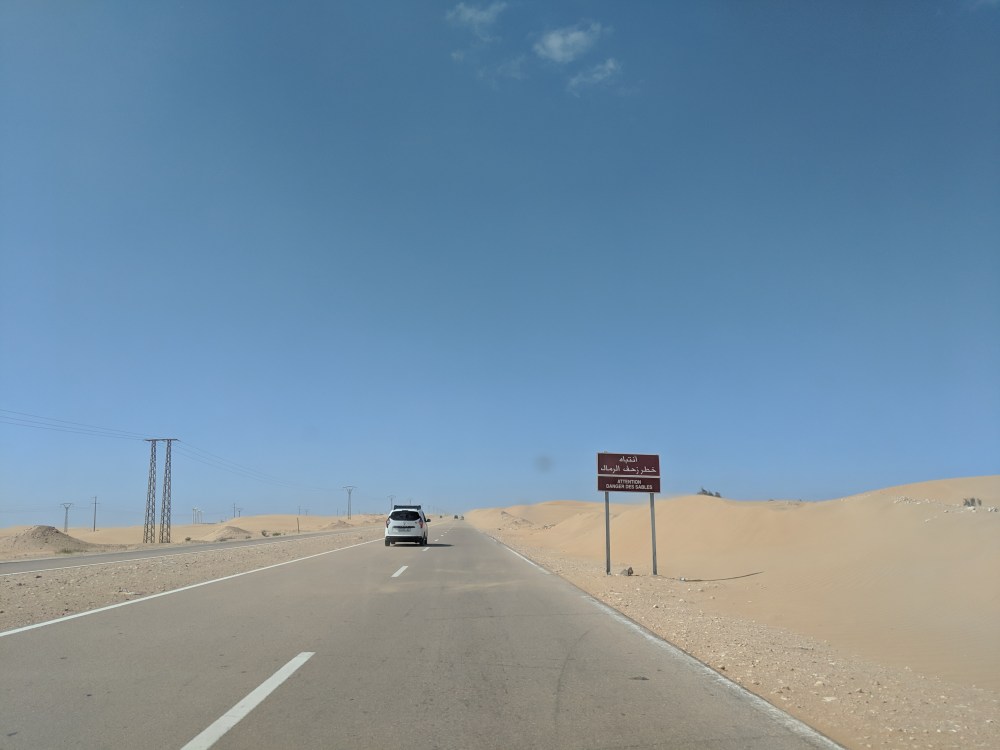
There was also a police checkpoint in these few kilometres of the taxi trip. What’s your nationality? What’s your profession? Where are you going? Where do you stay? Show me your passport. Then we waited several minutes until a mysterious person on the other side of the police phonecall confirms I’m allowed to go further.
And I was allowed to go on. But we didn’t reach the port, I got dropped in middle of nowhere, or, as one internet comment states, “in the back of beyond” on the beach proper. No, not on the beach but on the coast.
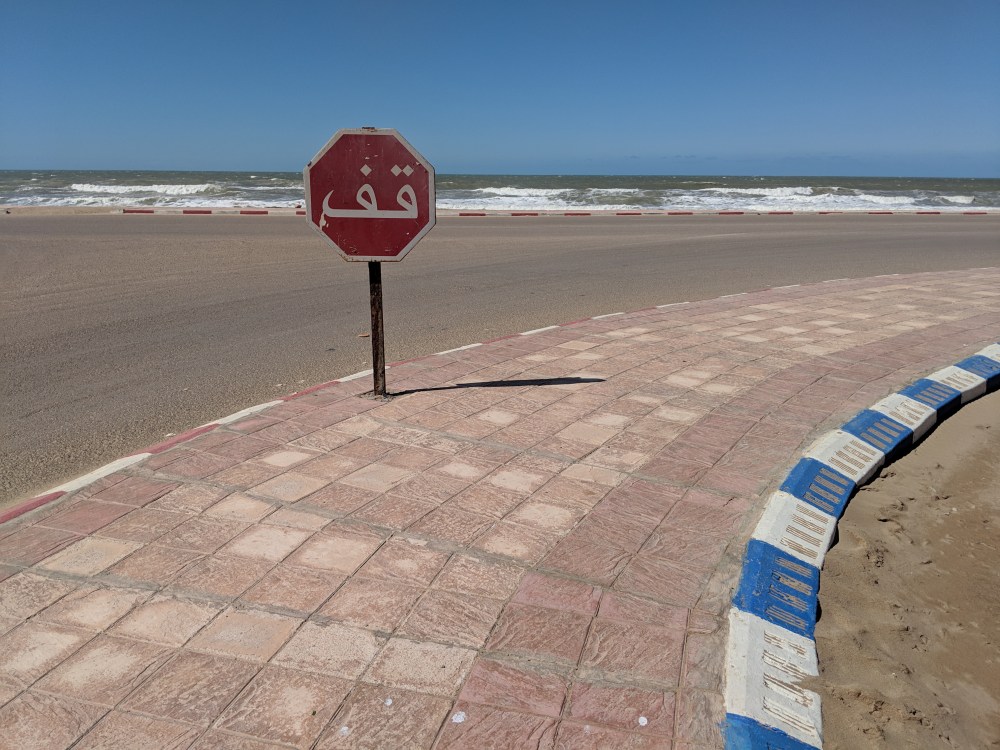
And the wind was strong and chilly. There was noone around, just me and empty houses and sand blown around. The village even has a promenade with benches and street lamps. There was me, a lonely fisherman, 2 dogs and some security people. It was all very surreal. Occasionally a car drove past. There were 2 cafes open. The ocean water looked grayish, the beach was just rocky ground ending abruptly where the water hit the shore. Waves were big and strong, Atlantic is not a friendly ocean.
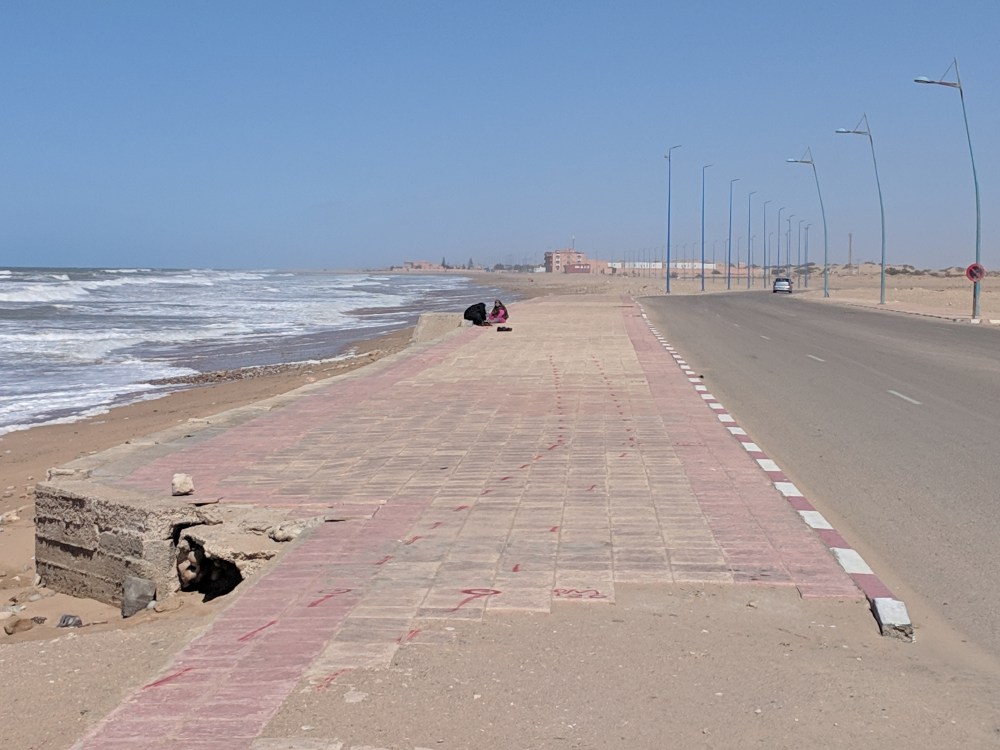
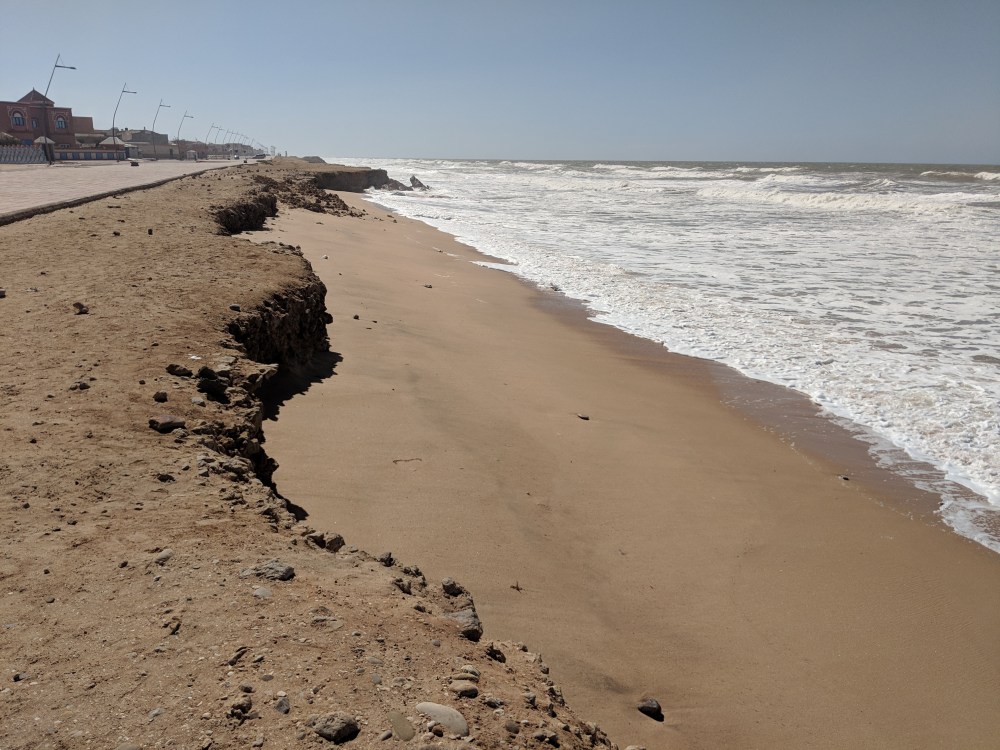
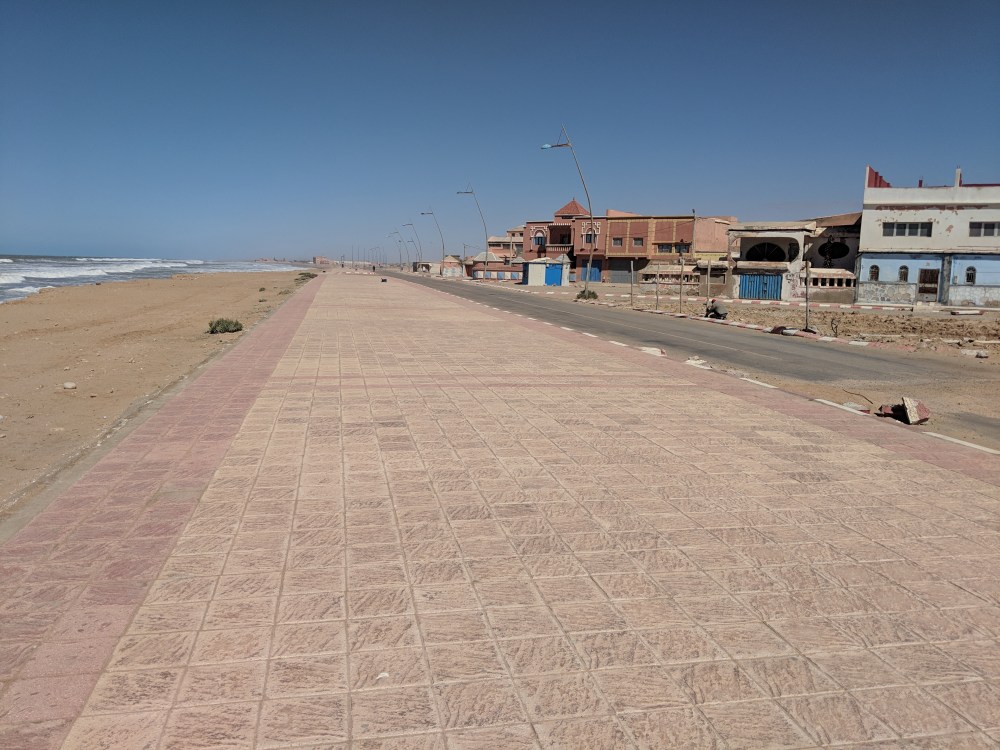
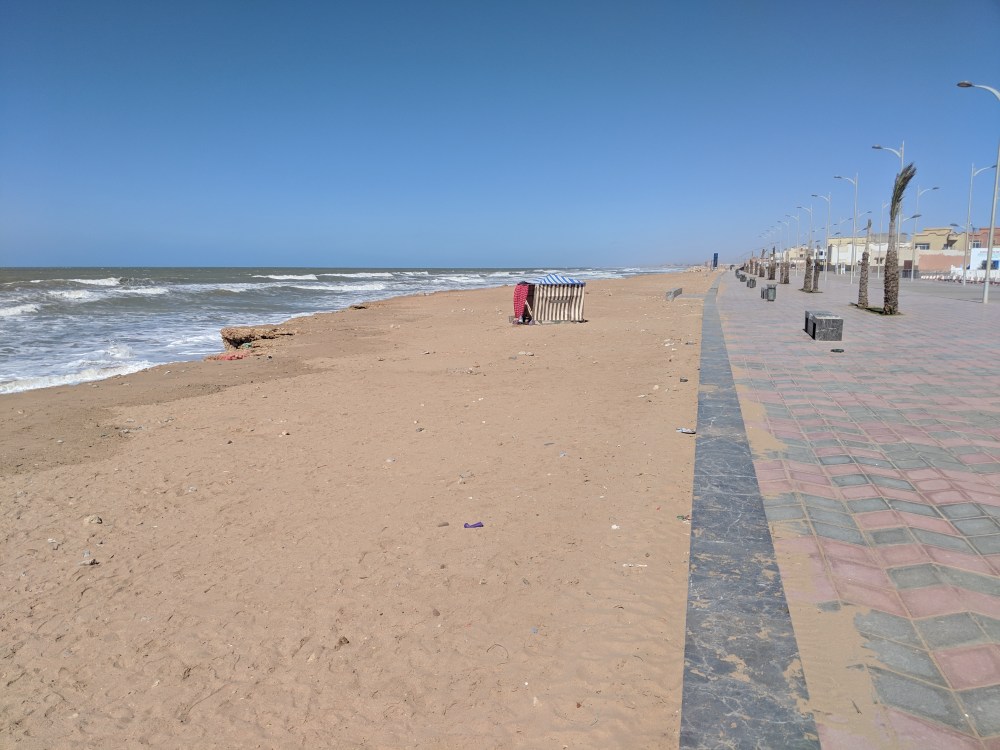
I walked on in this empty place until I saw perhaps the port on the horizon and the long belt that carries the famous Western Saharan phosphates into the sea and unloads it onto the ships. Apparently Western Sahara has more phosphates than all the countries combined.
I started walking back, stopped in a cafe, they had no food, just drinks. Took an orange juice and walked back to where the taxi dropped me. There was a family waiting for transport.
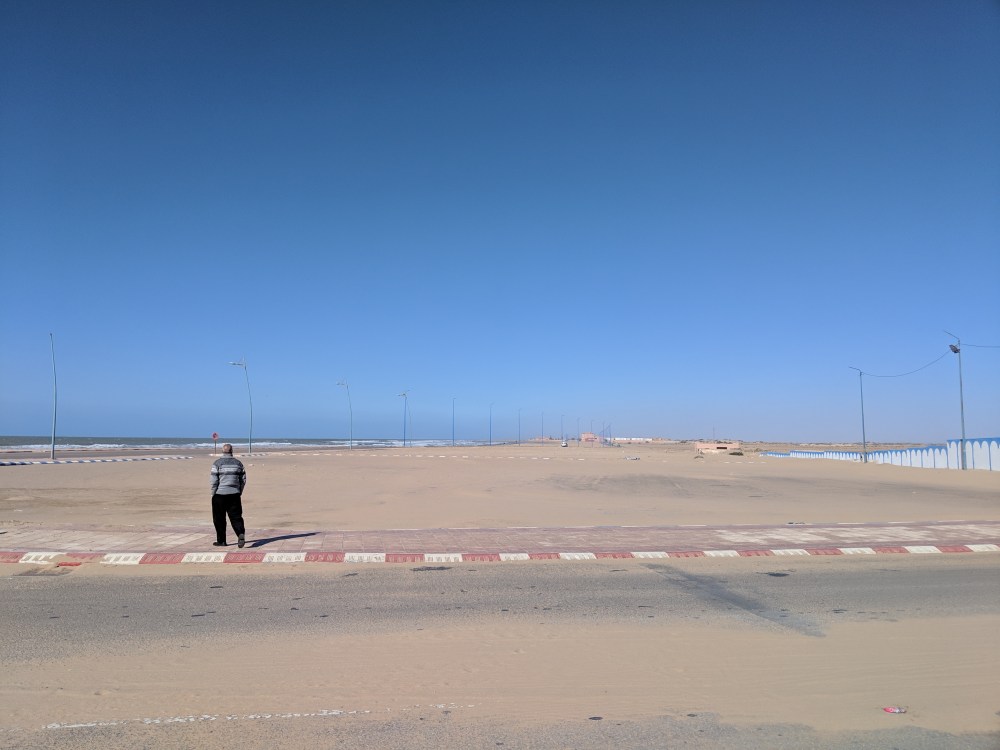
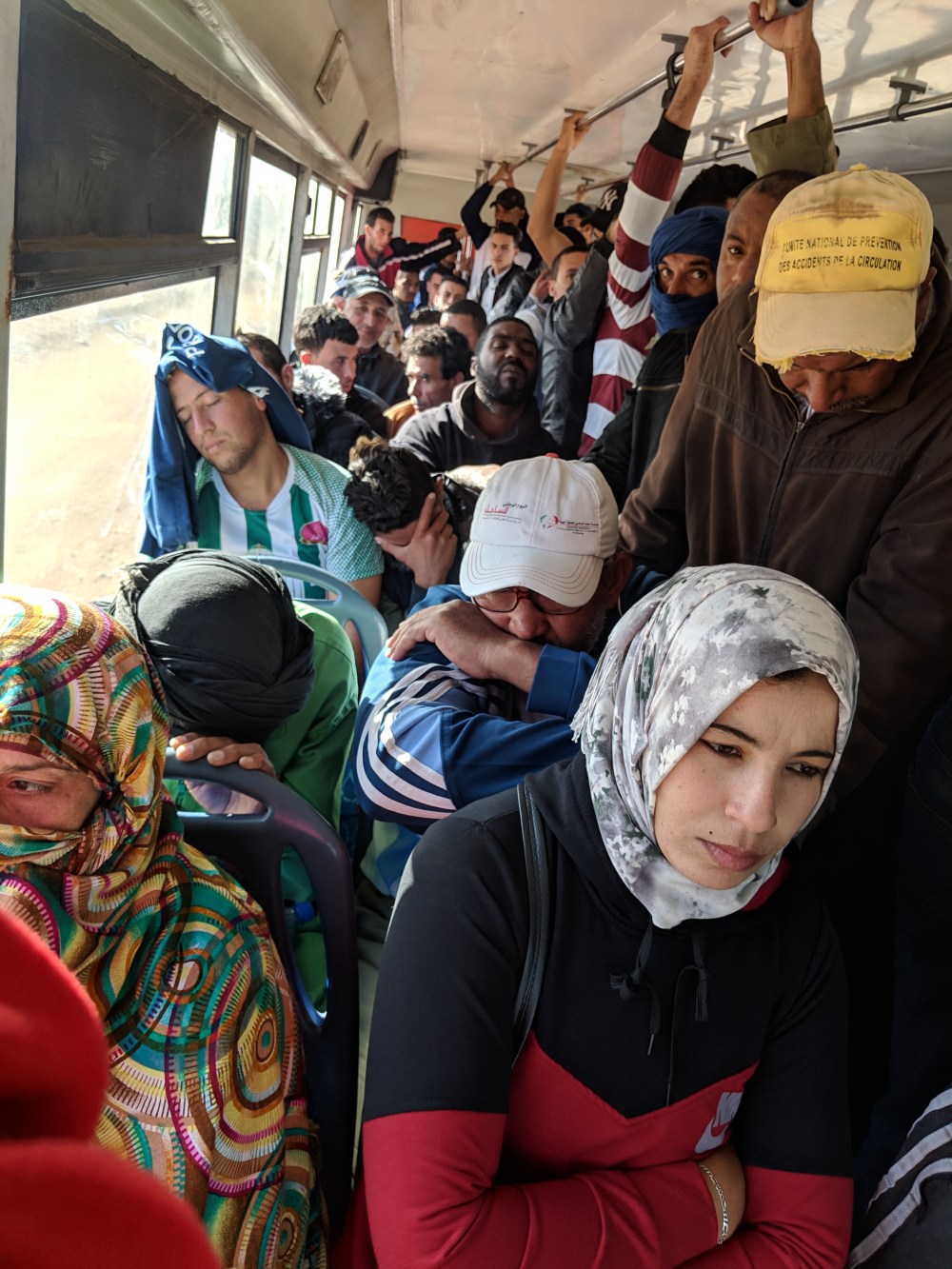
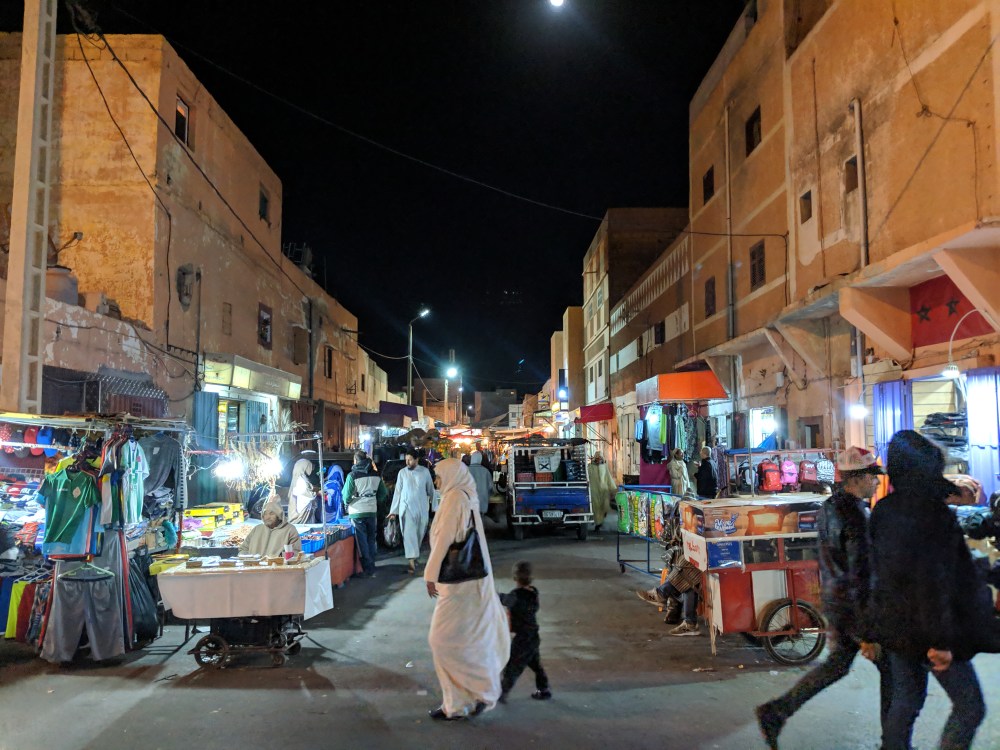
We waited for maybe an hour and a bus showed up. We came back to town. I had late lunch. It started getting cold, I put on a cap. Towns here come to life after dark.

 Coming back to Maman