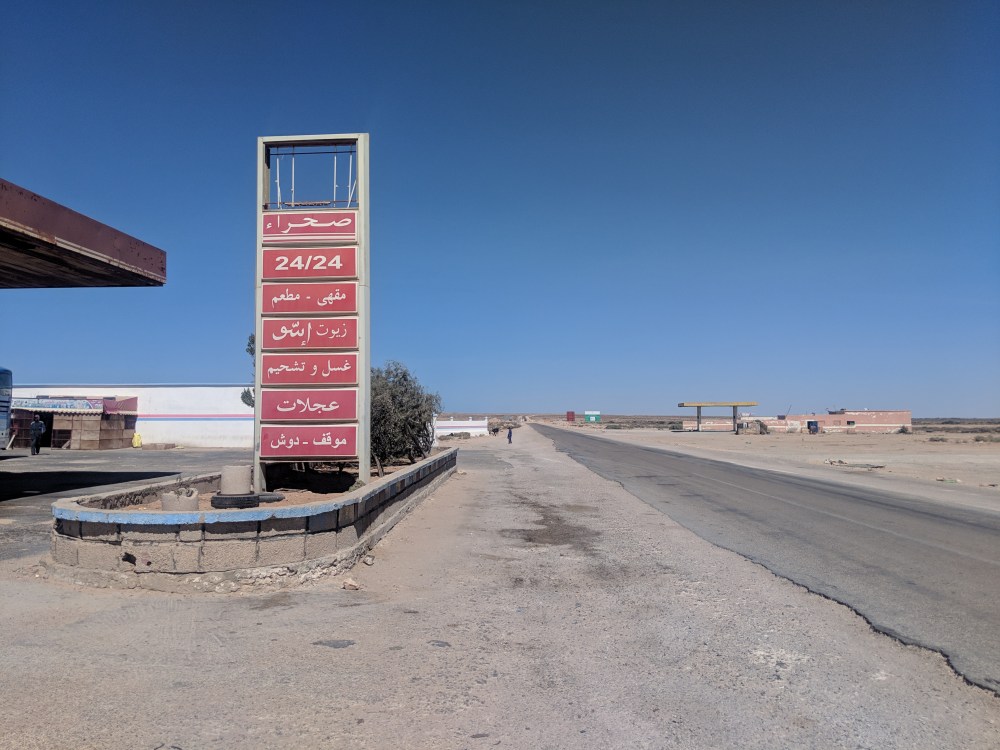
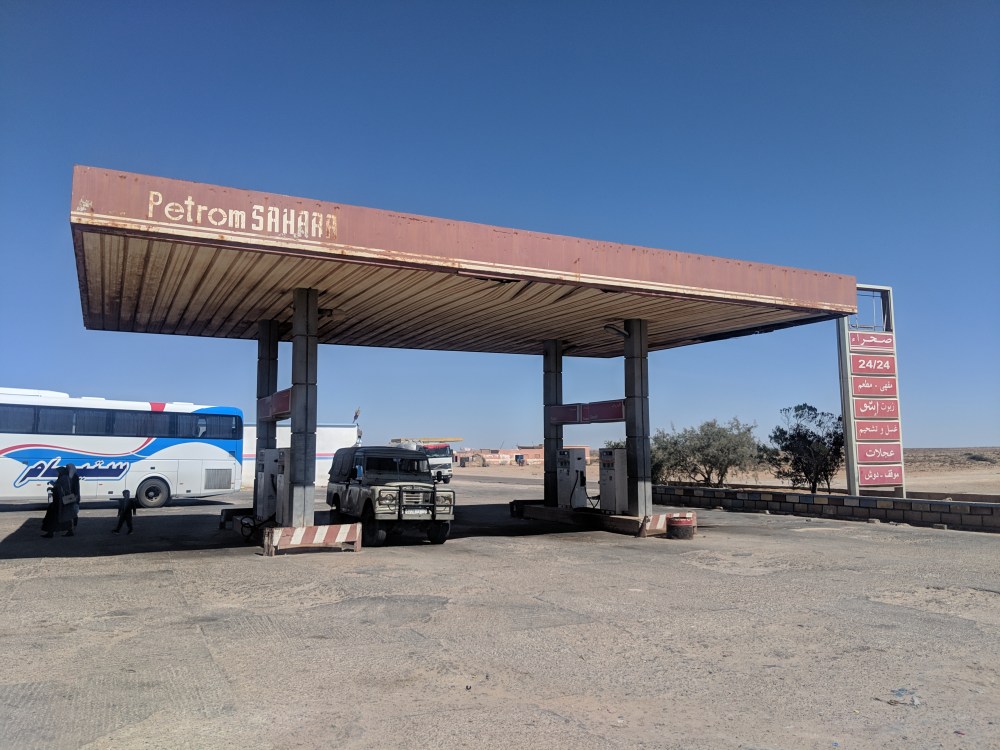
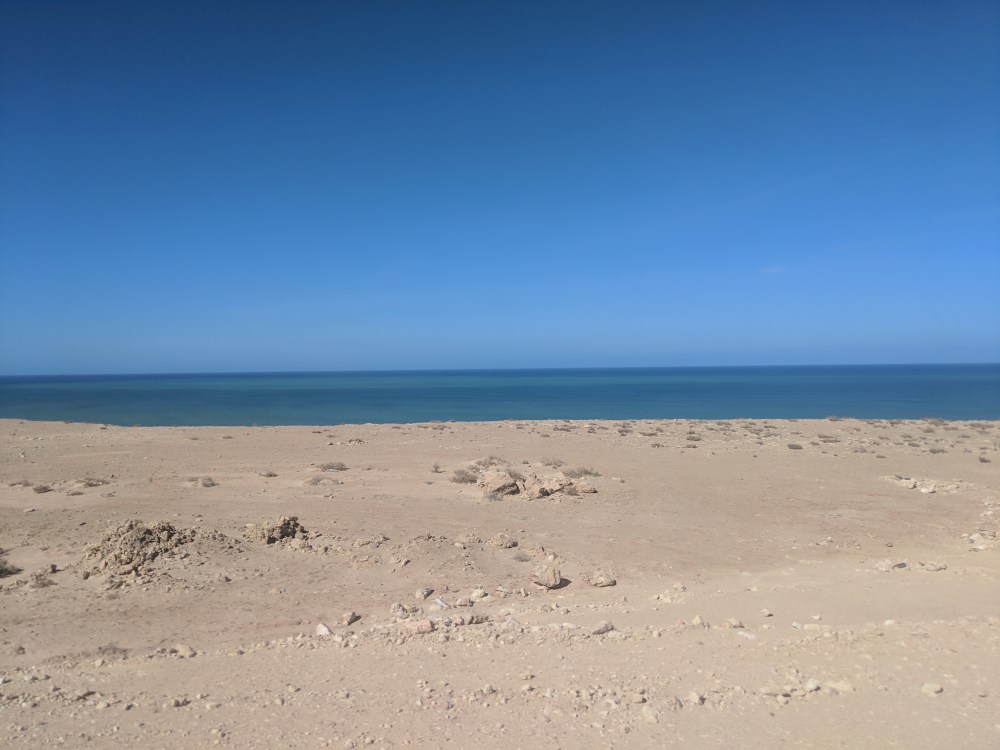
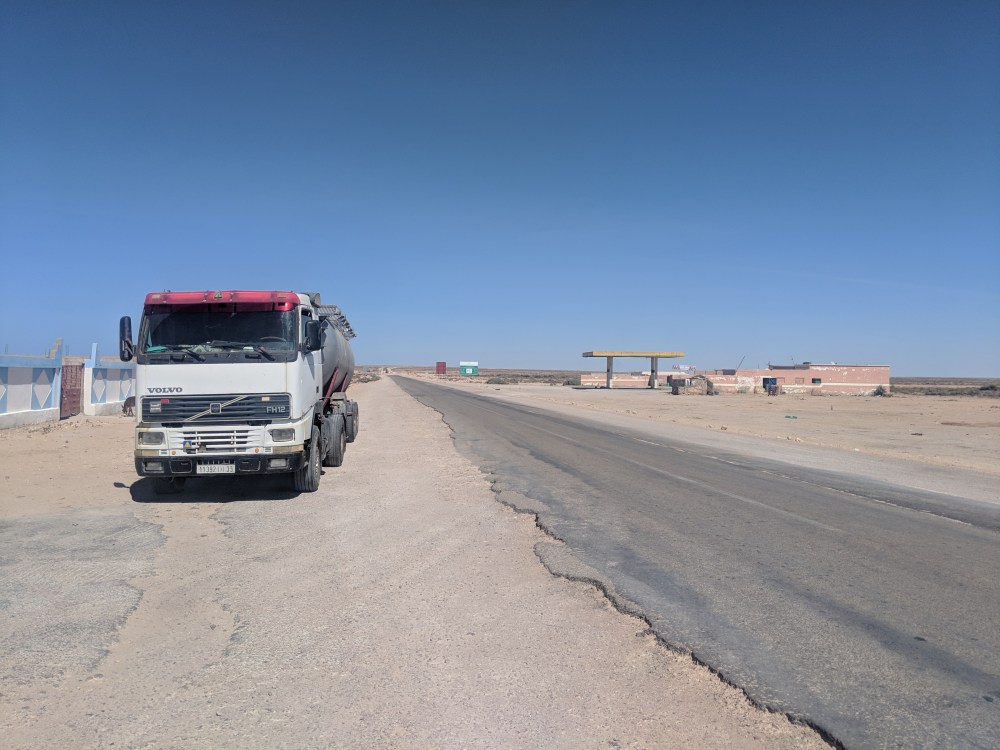
My Rough Guide to Morocco mentions 4 places to see in Western Sahara: Tarfaya, Laayoune, Smara and Dakhla. There isn’t much to see in either of towns yet the splendid desolation is tempting. I was thinking to go to each town but the transport options are poor: Laayoune to Tarfaya looks like there are only grand taxis, so they only go if they have a full set of people. There is one evening bus from Laayoune to Smara but I wanted to do it on a day trip, otherwise getting from Smara to Dakhla might take 2 days.In the end I decided to just go to Dakhla. Dakhla would be unavoidable anyway, it’s a stop on the long 1300km road to Mauritanian border.Sun rises after 8am in February in Morocco. That also means sun sets well after 7pm, which is good. But here cities come to life after dark and people go to bed late. Which means people don’t rise until after sunrise. Cafes open 9-10am most of the time.And in Laayoune buses to Dakhla leave around 8am. Most of them are buses coming from Agadir, Marrakech or even as far as Rabat. And to get to the bus station at 7am was a challenge. The city seemed dead, the taxis were few and far between. Even the sunrise muezzin call was at 7am, where normally you can wake up to his chant at 4am! The CTM bus to Dakhla I boarded was half-empty. All the buses I took in Morocco were half-empty. The ticket is 180Dh, the journey took 9 hours. It was a quiet one. We drove in the gray desert. There were purple/violet flowers in bloom. Atlantic Ocean was a few hundred meters to the right. The road was in good condition but there were a few rough patches. We stopped twice for a meal, I only had drinks and bread with olive. Most of the journey I read the “All grains of sand” book by Bartek Sabela, which is a story about Western Sahara and its hopeless struggle for independence. It’s obviously not a happy book.I found myself often distracted by the monotonously glorious landscape. The gray sand, the carpets of small flowers, the Atlantic Ocean down below, the occasional Saharan tents. It can be mesmerising even if it’s not spectacular, such nothingness.
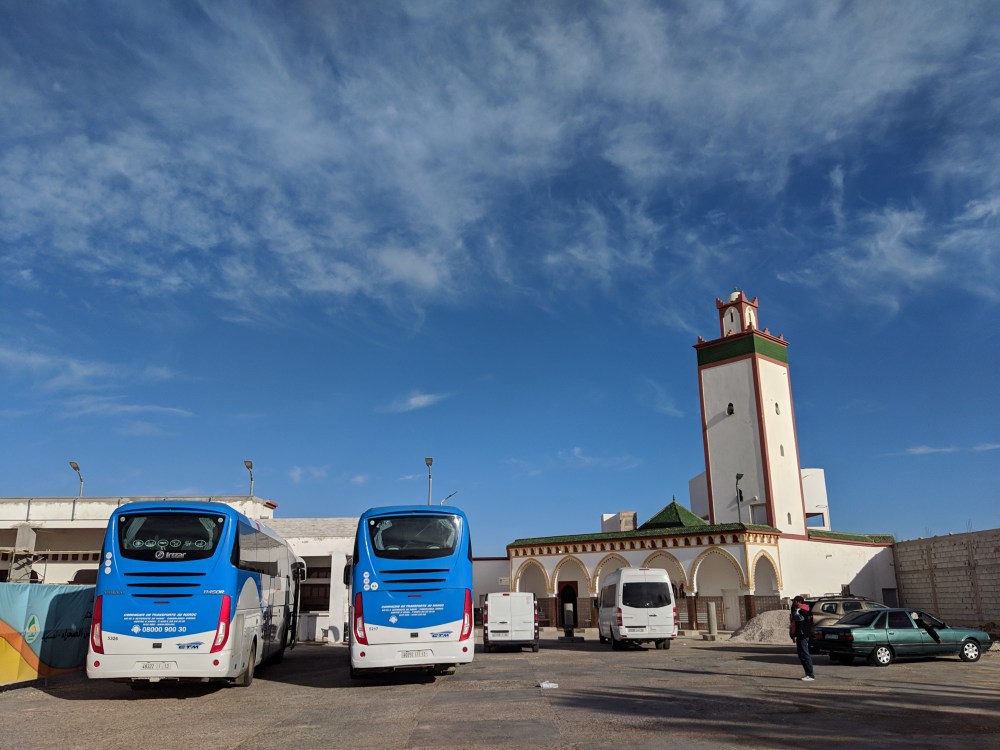 There were 2 police stops where my passport was checked and the most important question was asked: “what is your profession?”.
 During the 2nd pit stop one man started talking to me. His name was Othman, or at least that’s how he pronounced it. We started discussing religion, names and where they come from (I claim mine has no meaning but if it does, it probably comes from Bible), which religion allows divorce and whether temporary marriages in Sunni Islam are made for specific time or not. I was getting confused on how much I can talk. Othman said he was from Sahara and when he asked me “Is this your first time here?” I didn’t know if he meant Morocco or Sahara. He meant Sahara. In Laayoune I was also confused about the language to use: the first taxi driver was responding to my French in Spanish. Here in Dakhla a waiter greeted me in Spanish. Am I disrespectful if I use or don’t use Spanish? How do I go about talking about Western Sahara with Moroccans? On the bus there was also a Moroccan couple, with whom I had a chat. They were going on holidays to Dakhla and they fed me oranges.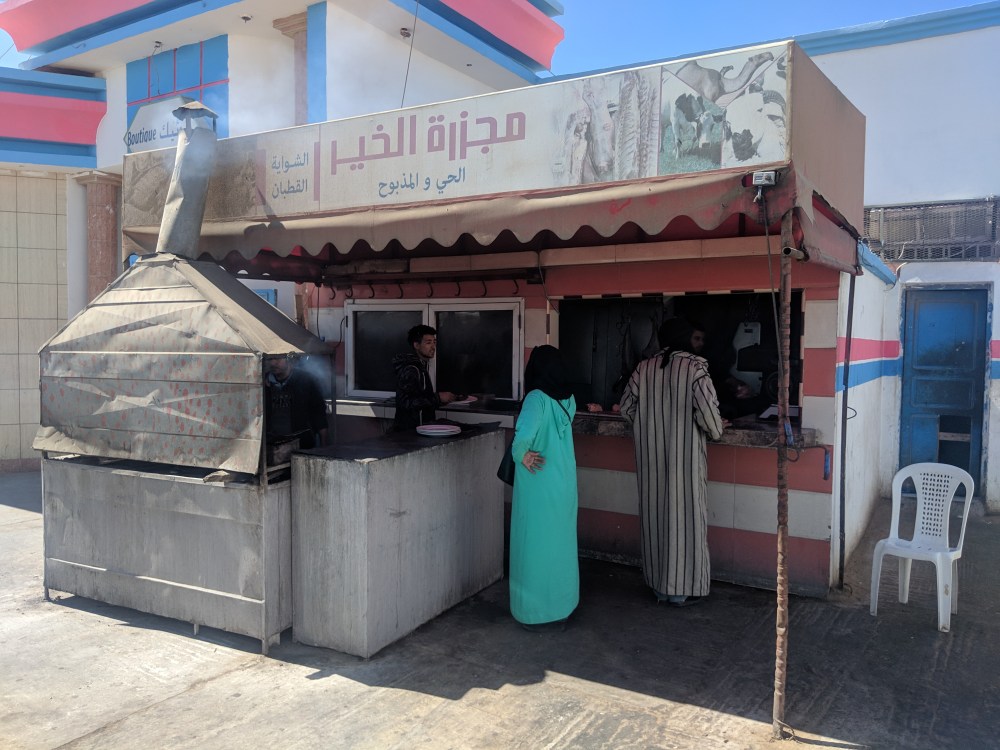
 D
D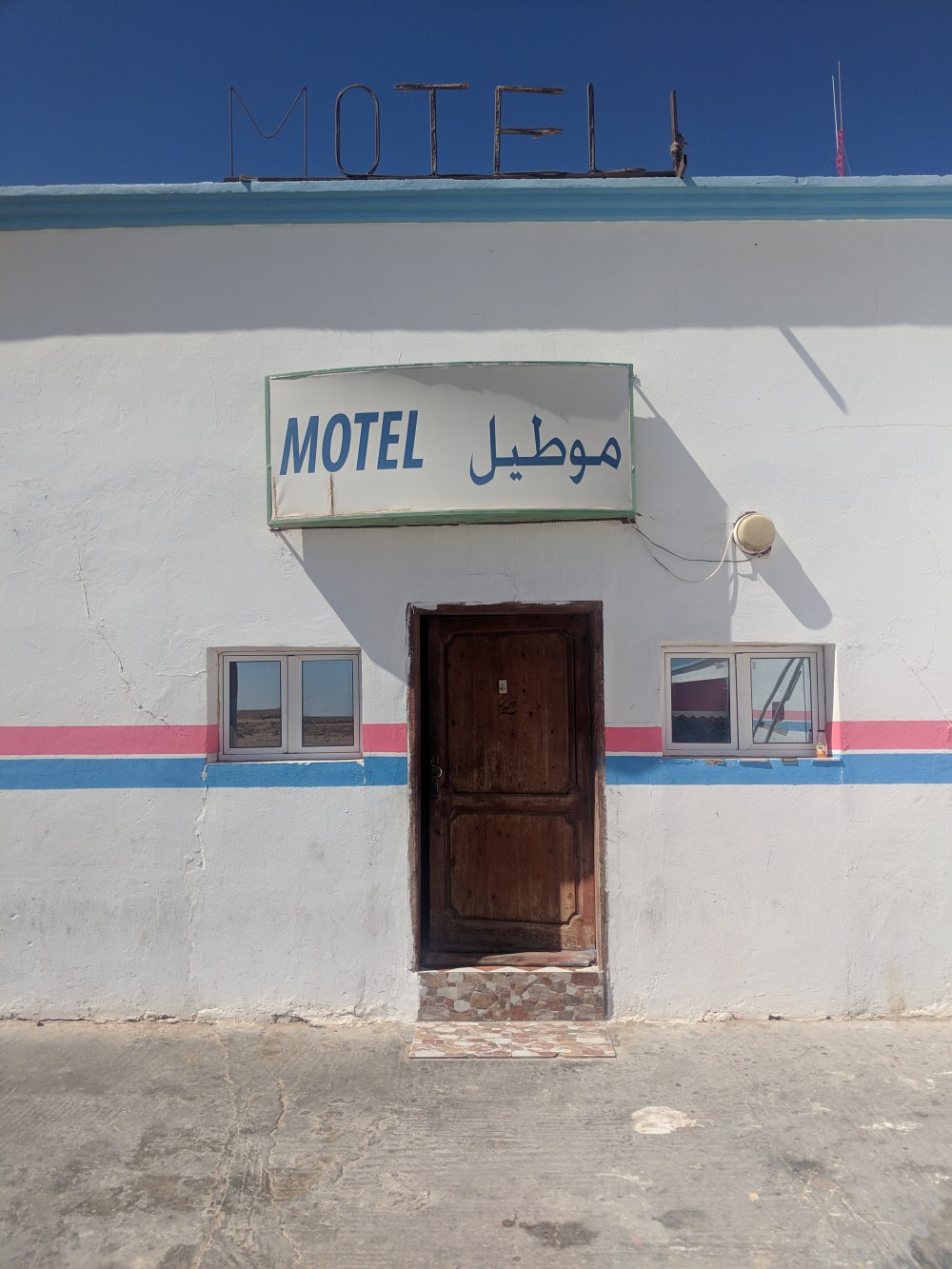
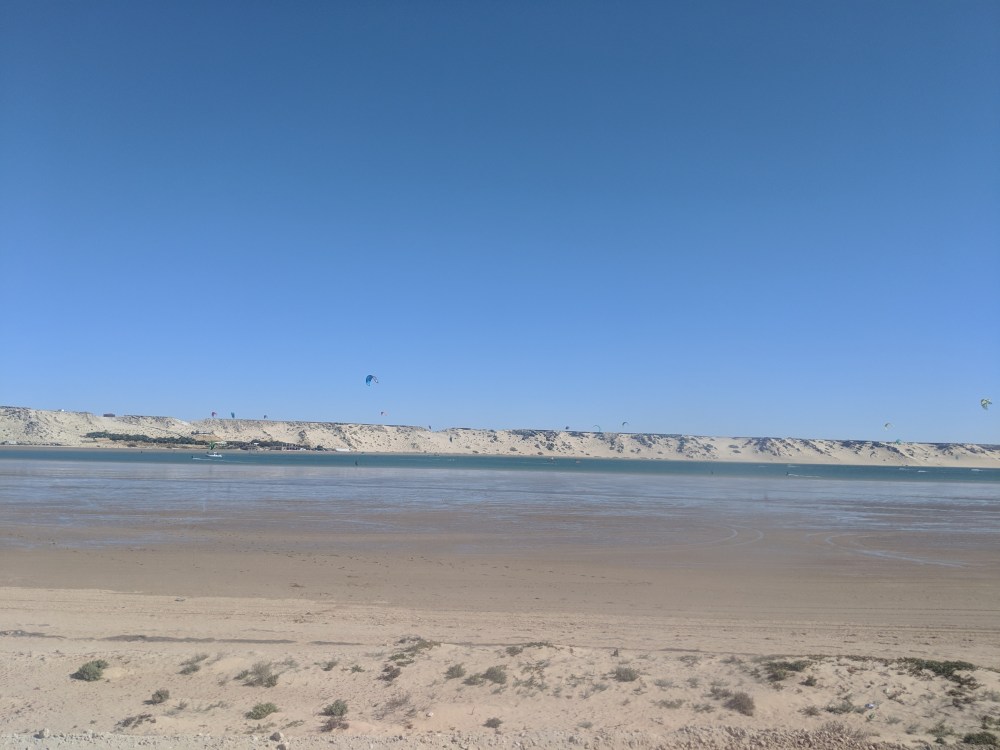
 akhla is apparently popular with surfers and kitesurfers. Just when the bus turns right onto the Dakhla Peninsula, a sea of kites opens. Literally a hundred or more on a small piece of water is floating in the air.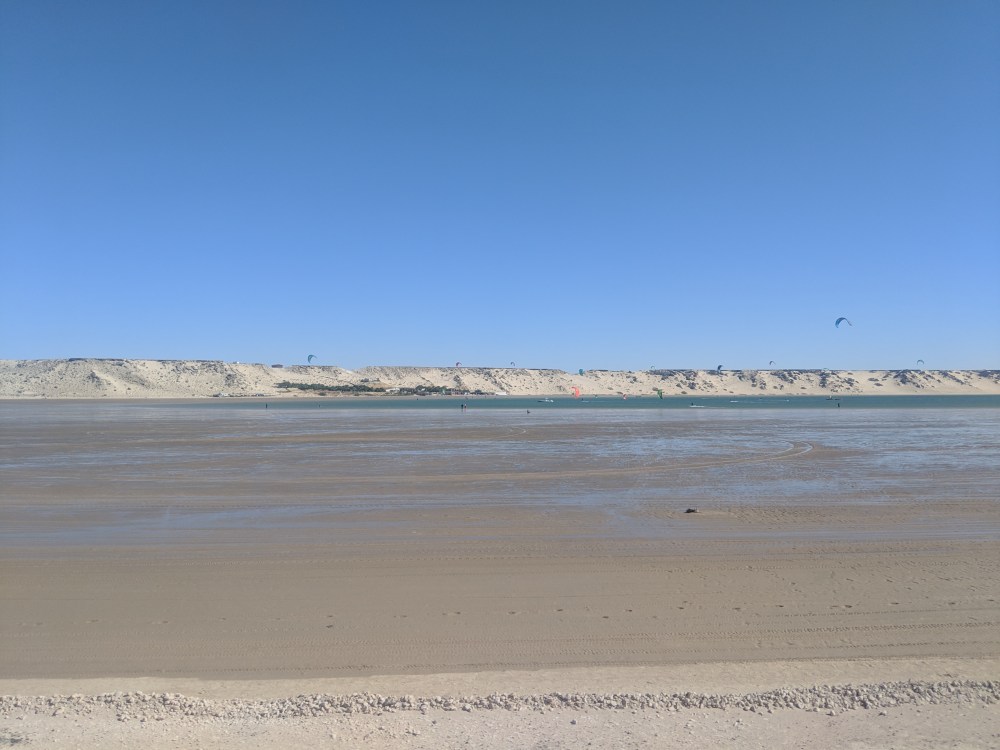
 C
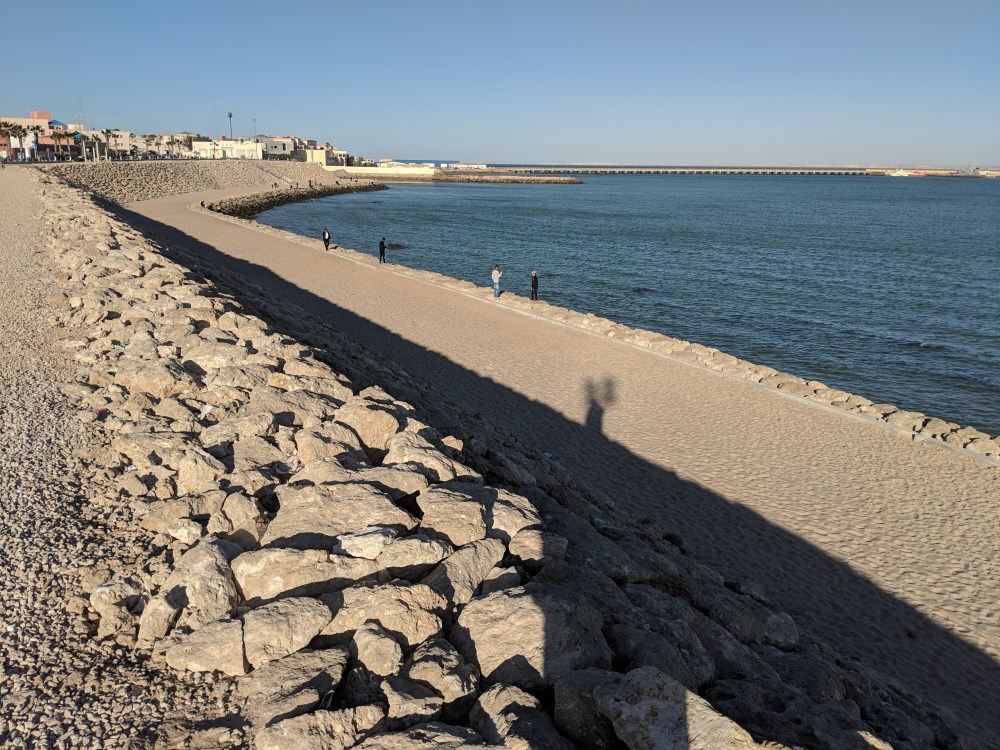
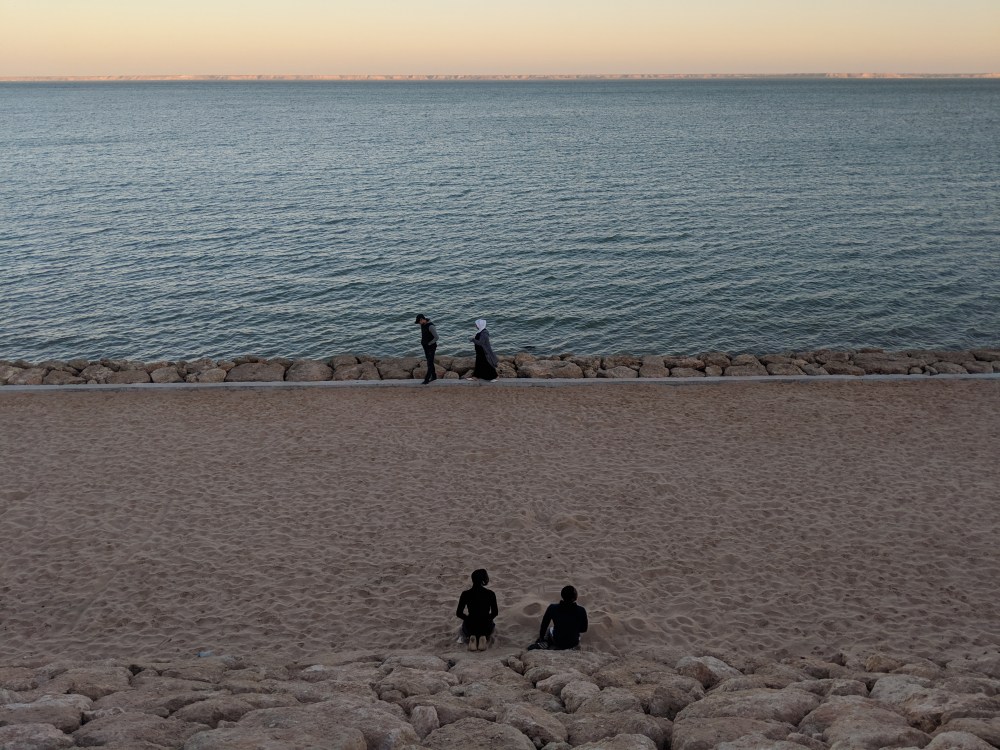
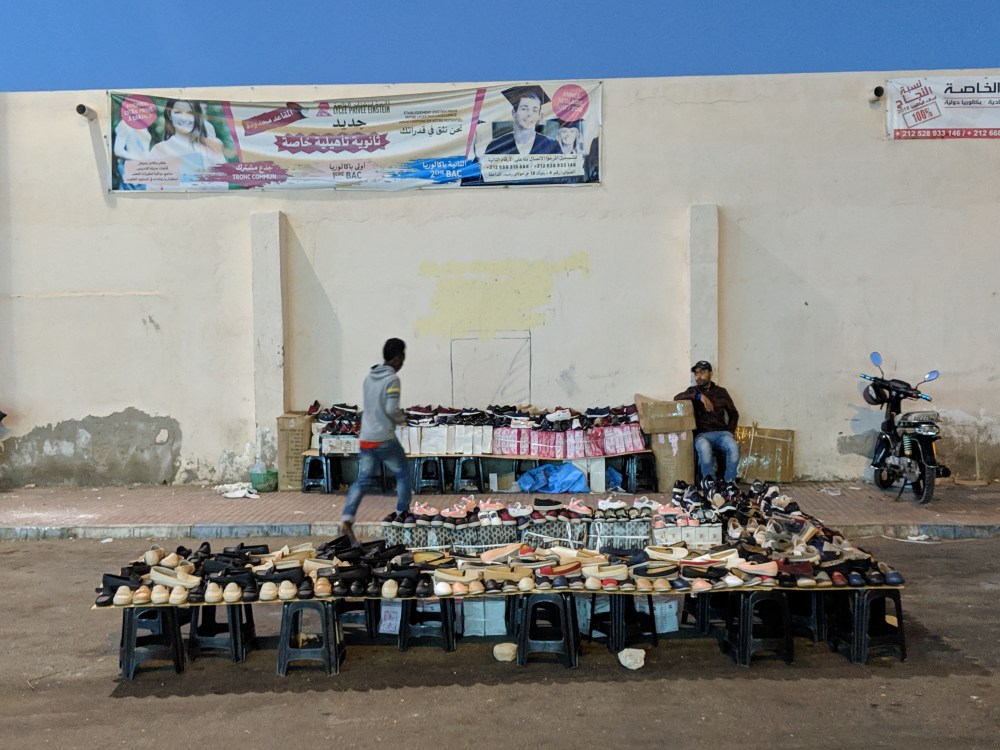
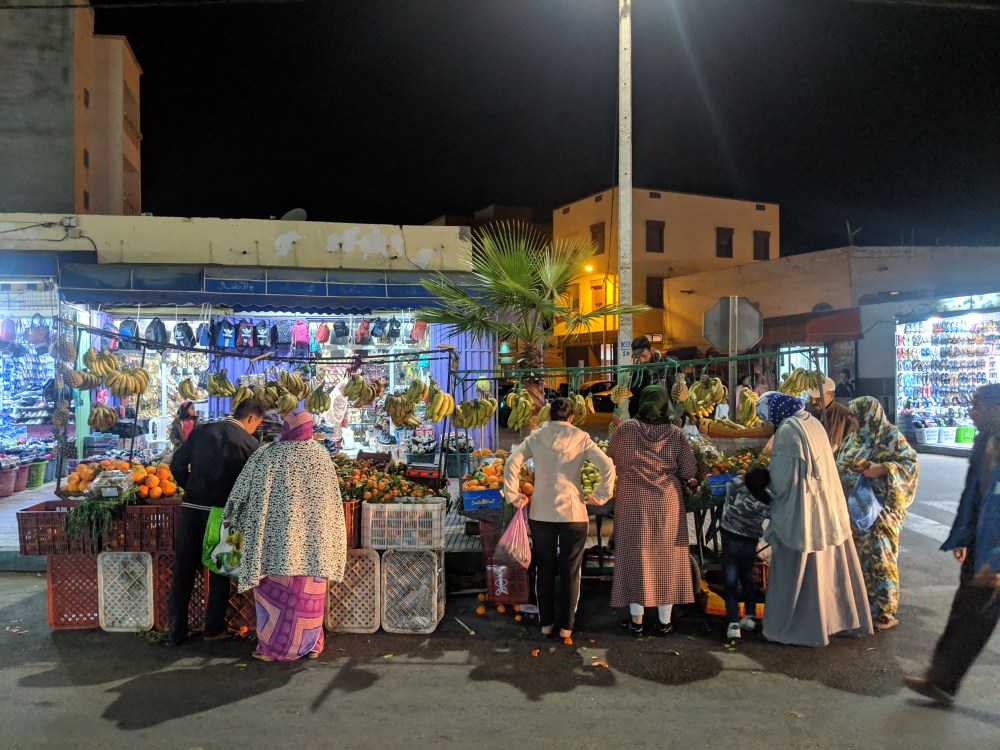
C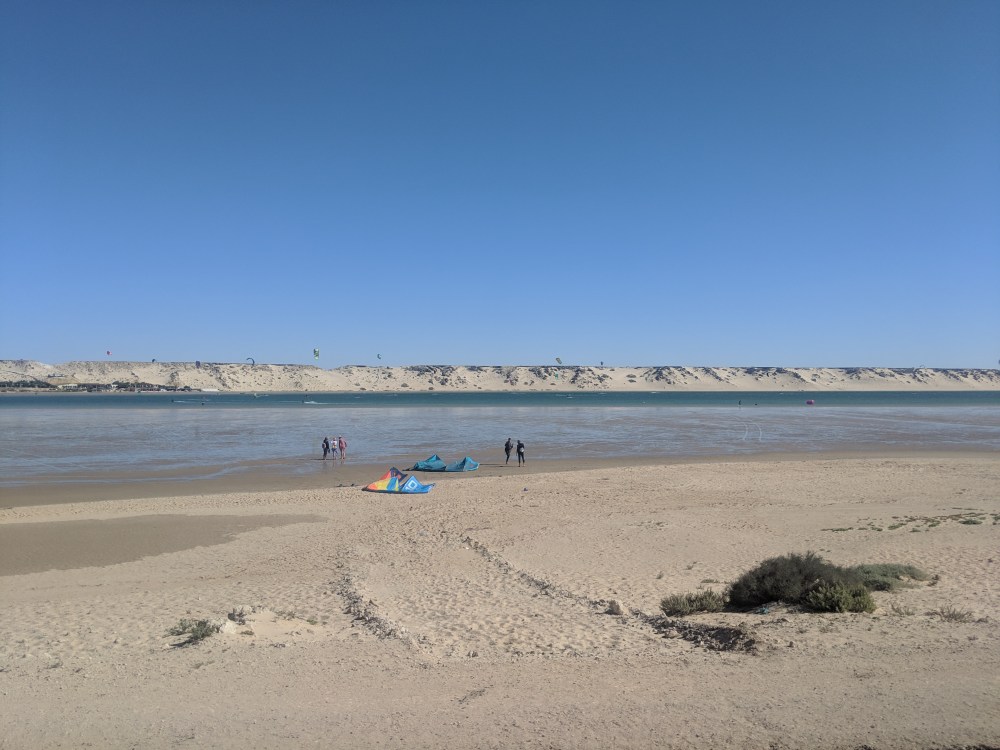 ity itself is washed out cube houses all over but without any obvious atractions. It’s warm around but the wind is strong and chilly. There are more people with turbans, also many more black people. A hotel I stay in, Hotel Sahara, is busy. I had a perfectly grilled octopus for dinner (70Dh) in Restaurant Bahia. I still have a bottle of wine from Ceuta which I probably have to consume before I enter Mauritania.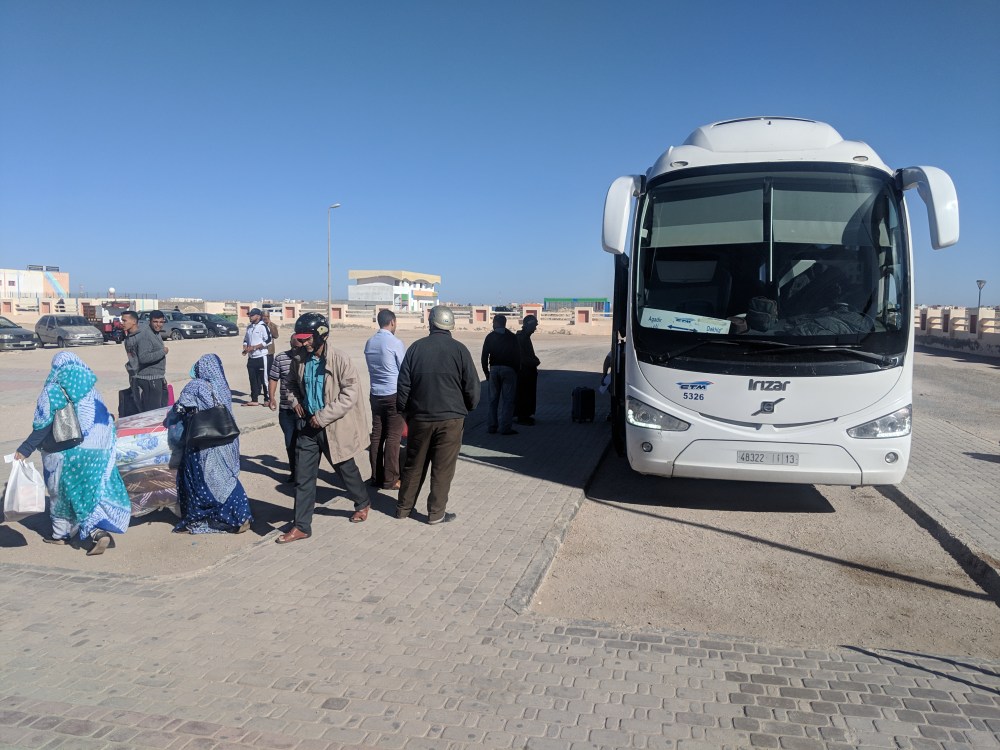
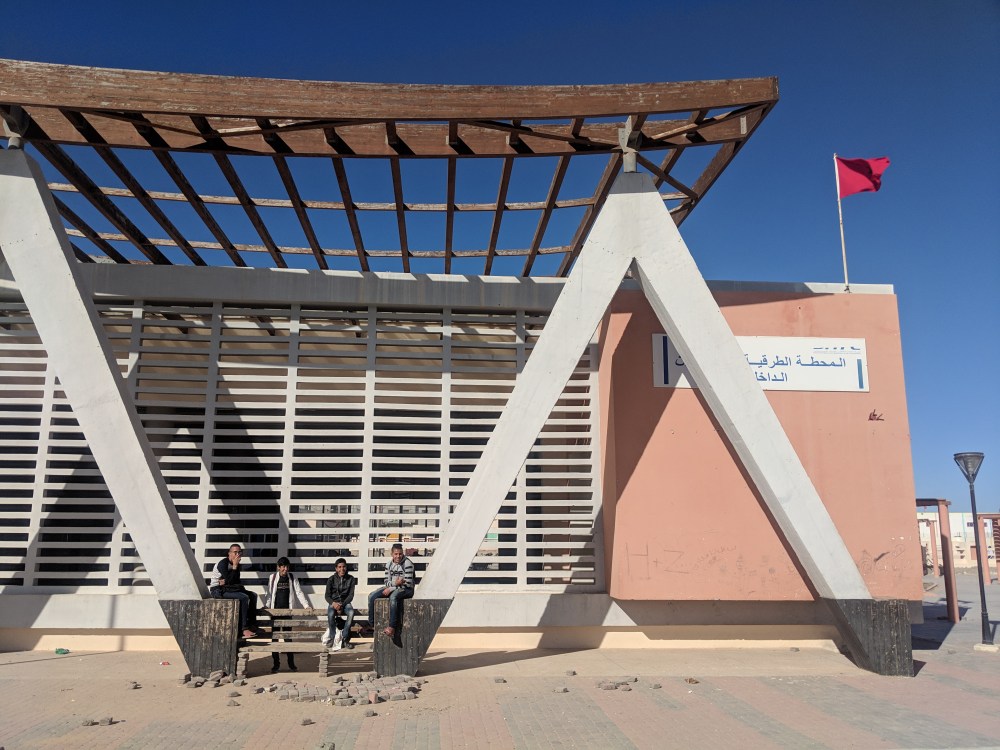
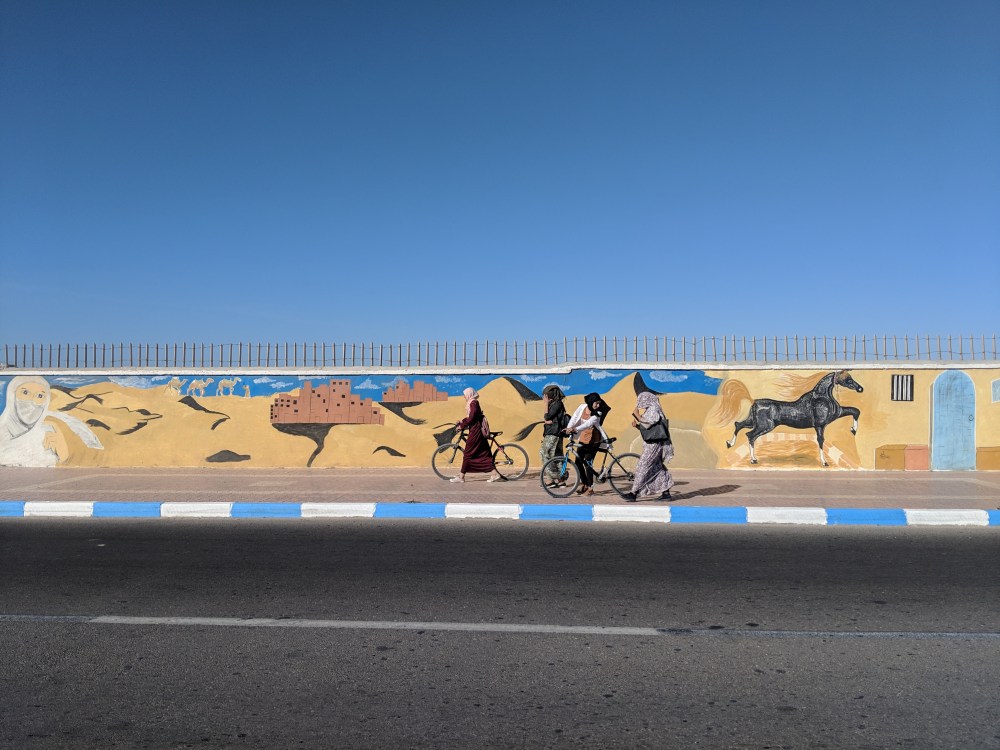
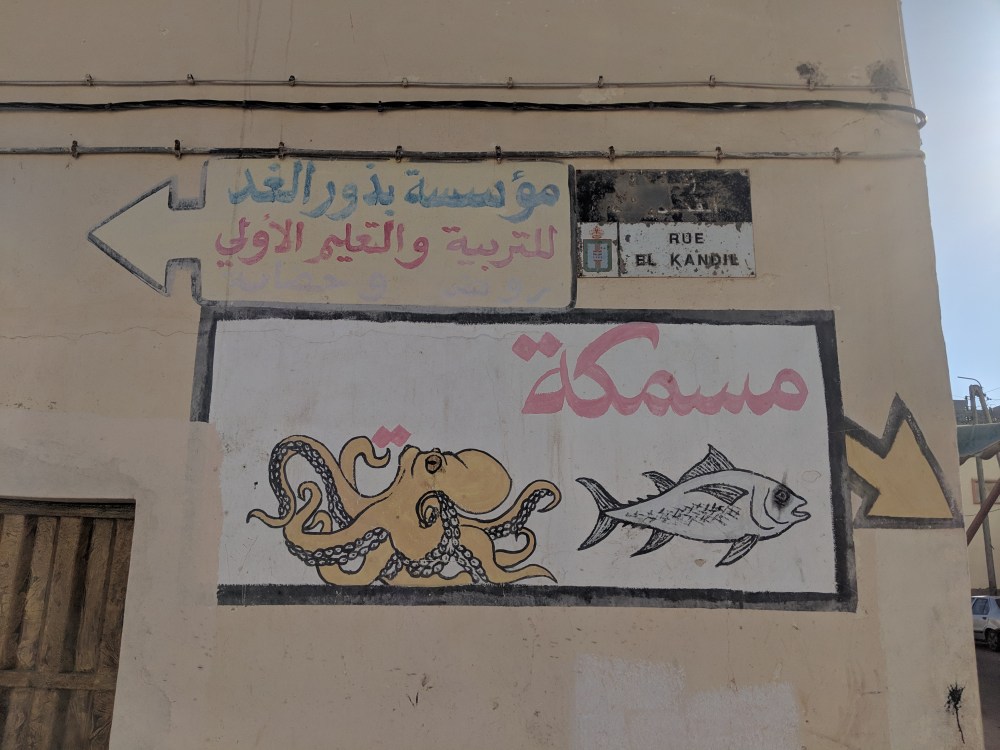
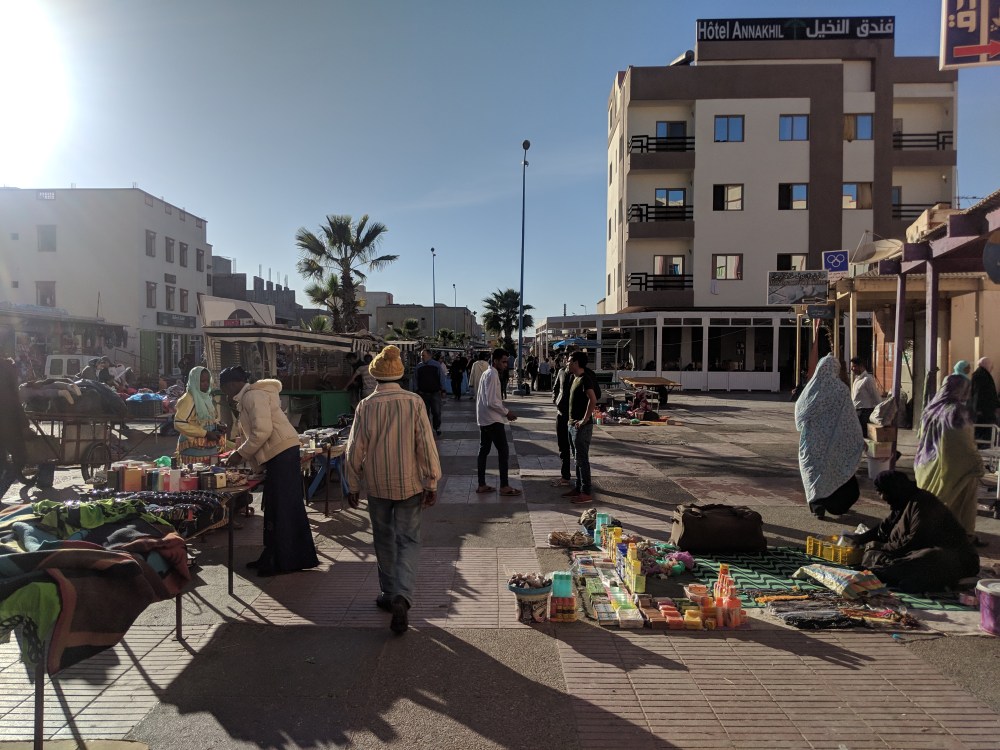
Laayoune to Dakhla: South South

 Coming back to Maman