The day would be easy. Cape Coast and Elmina are I think one of Ghana’s biggest attractions with their slave forts and they are not far from Ghana yet another tourist attraction – Kakum National Park with its famous (possibly because it’s the only one around) canopy walk.
Kakum National Park I’d seen once, it was $20 to walk the canopy walk so I’d skip. Forts in Elmina and Cape Coast are not much cheaper, 40cedis/$10 each, I’d seen them several times so I wouldn’t enter but at least Elmina fort is quite picturesque.
When I was walking down the staircase a woman stopped me and said they are also offering laundry service there. Oops. I asked her if I’m that dirty and she just looked at my t-shirt. It’s all dark in the back from the backpack. Oh well. I said I’d find her later. I didn’t.
Breakfast I had Ghana style – jollof rice with stew (here stew is the sauce in which meat – and here meat means beef – is cooked, it’s usually quite spicy), egg and what a man standing next to me called “leaves” – a dry salad. It was quite alright. It was the first time I had jollof on this trip. It’s my favourite way of cooking rice, with tomatoes and spices and if it’s done right, it’s outright delicious. Everyone says Senegal is a home of jollof but I have not seen any jollof there. And there is a constant argument as to who does jollof better: Ghana or Nigeria and for me there is a clear winner: Nigeria.
To Elmina the transport is in a car, 3 cedis per passenger, 1 sits in front, 3 sit in the back. Not bad unless the car is a small Suzuki. But it’s really 10km ride. And even during the 10 kilometres passengers were stepping out and stepping in. I got off just before Elmina where there is a nice view towards the fort from the beach.
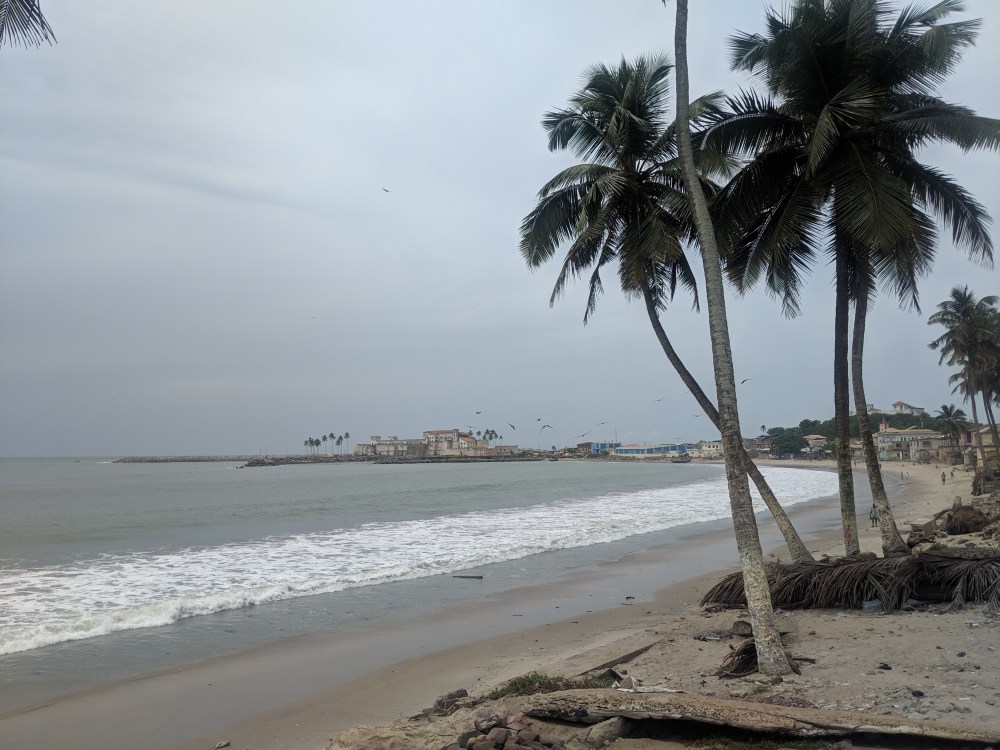
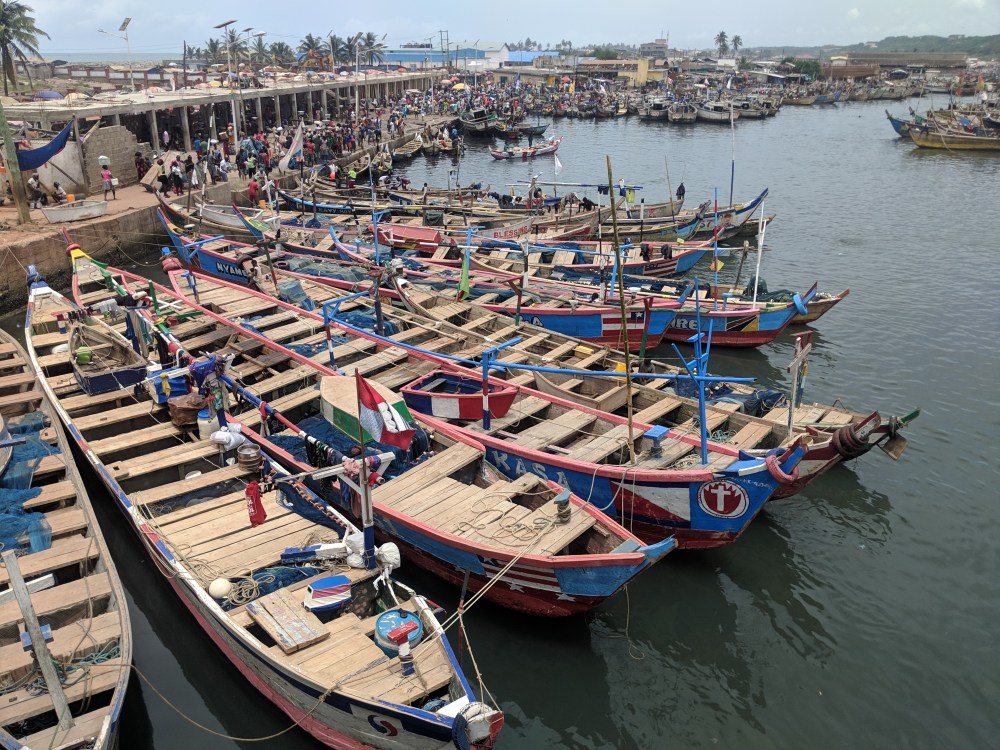
The beach itself has a very utilitarian look – it’s a filth. But the palm grooves lining the shore are a nice view, the houses lining up the road are colourful and once you walk towards the fort you pass a fisherman village, a set of wooden houses, it’s very colourful.
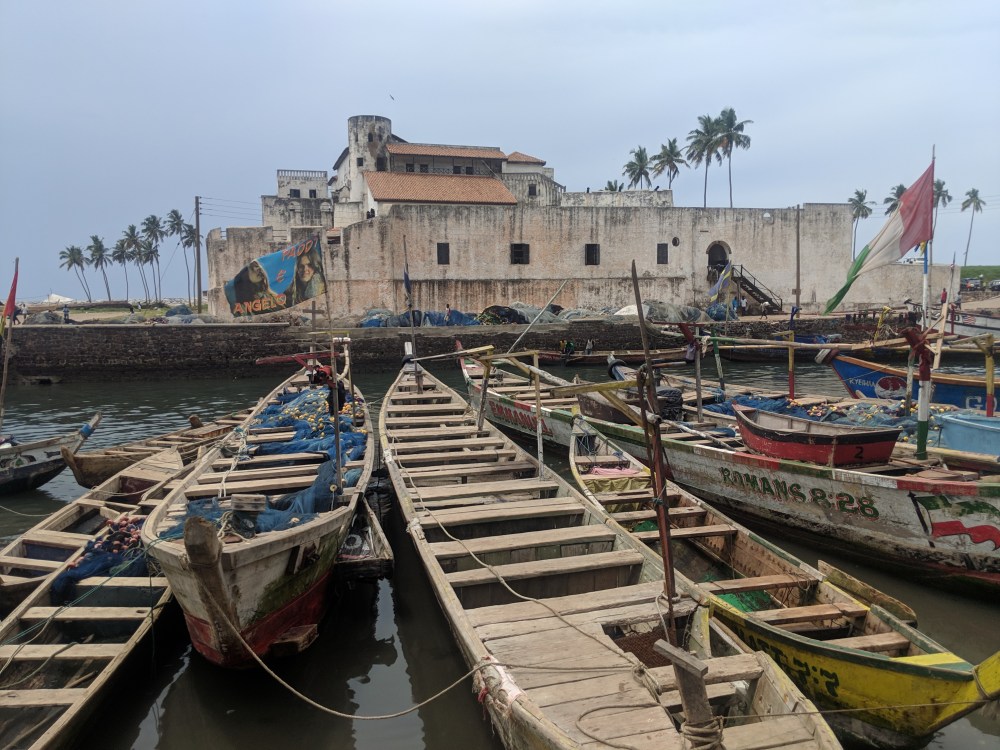
Just by the fort as I was taking pictures of the boats one man, passing by, told me to “stop”. I didn’t pay much attention to him, crossed the rusting bridge over the river and approached the fort.
It used to be a textbook example of tourist management. Boys would run up to you, asked your name and asked how you spelled it. After you’d left the fort they’d run to you with quite impressive seashells with your name painted on them. “This is Bartek’s memory from Elmina” or something like that.
None of this happens today, am I too early for the boys? But I see tourists. Tourists! Ah, a family of four walked into a guesthouse nearby, an elderly woman walking with a huge camera, does she know what she’s doing? Then some American black tourists who are coming to Ghana to pay hommage to their ancestors. And a couple that looked straight out of Germany. That’s seven white people in one morning. There would be more.
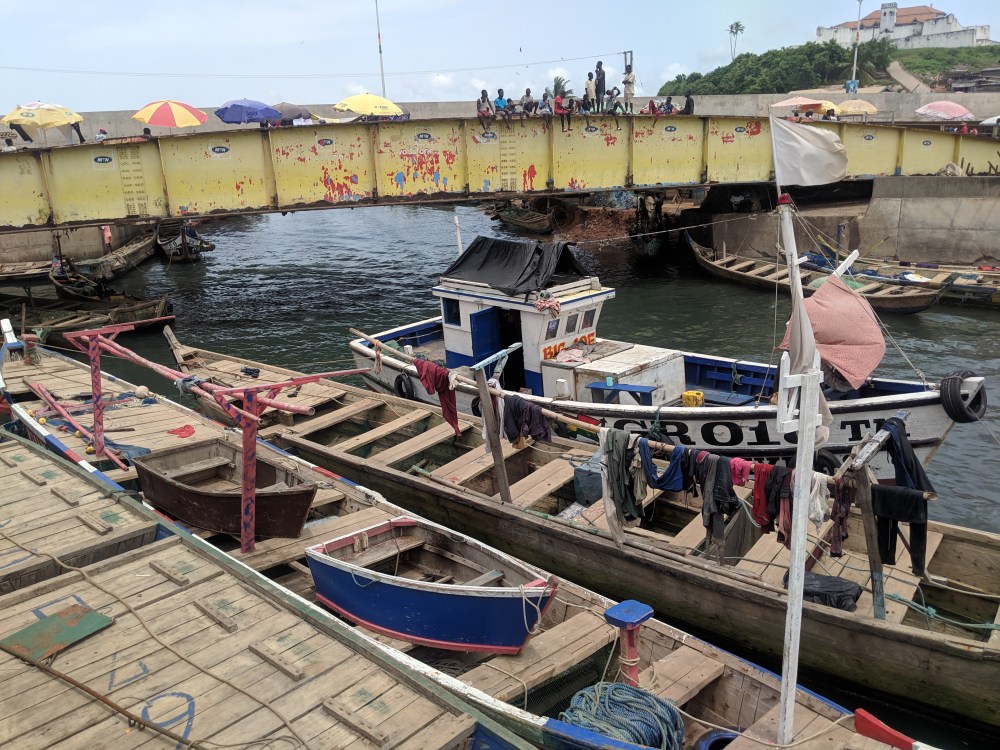
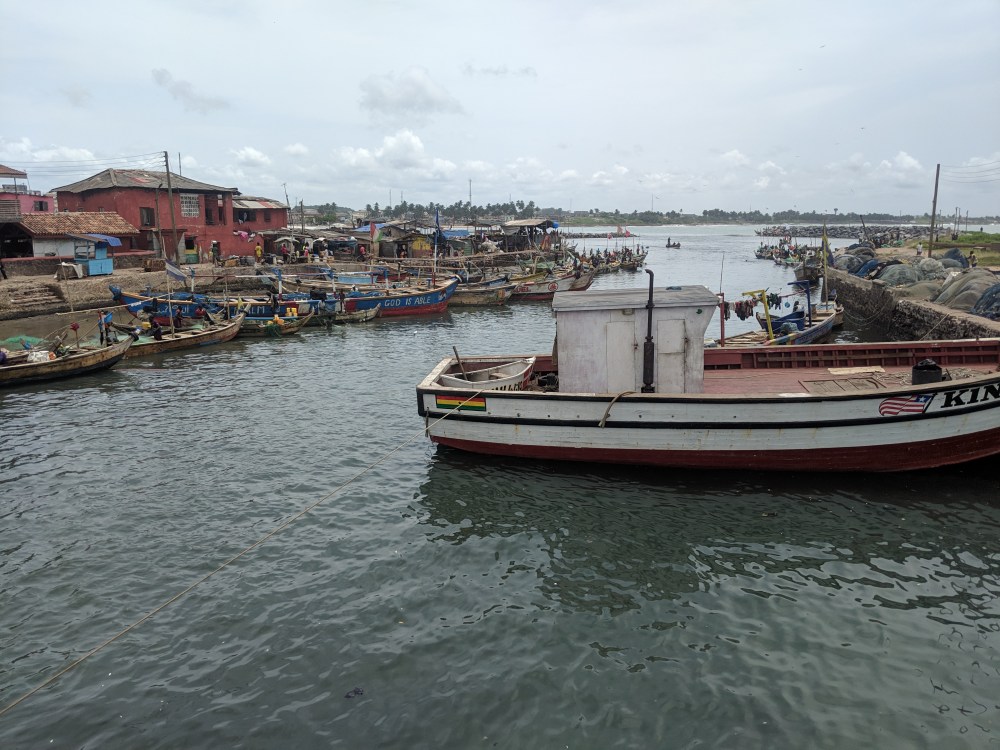
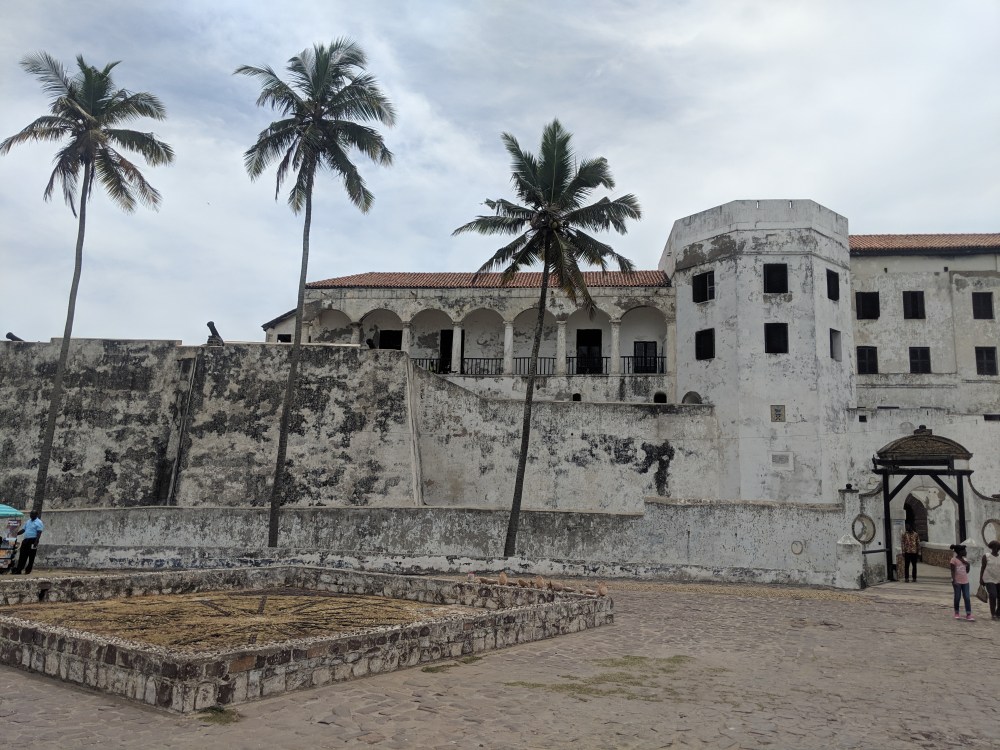
I didn’t go into the fort, instead I turned around and crossed a new concrete bridge back into town. On the other side of the bridge, a riot of colours. Boats, people, houses. Some of it looked straight out of pirate movies. Very picturesque view.
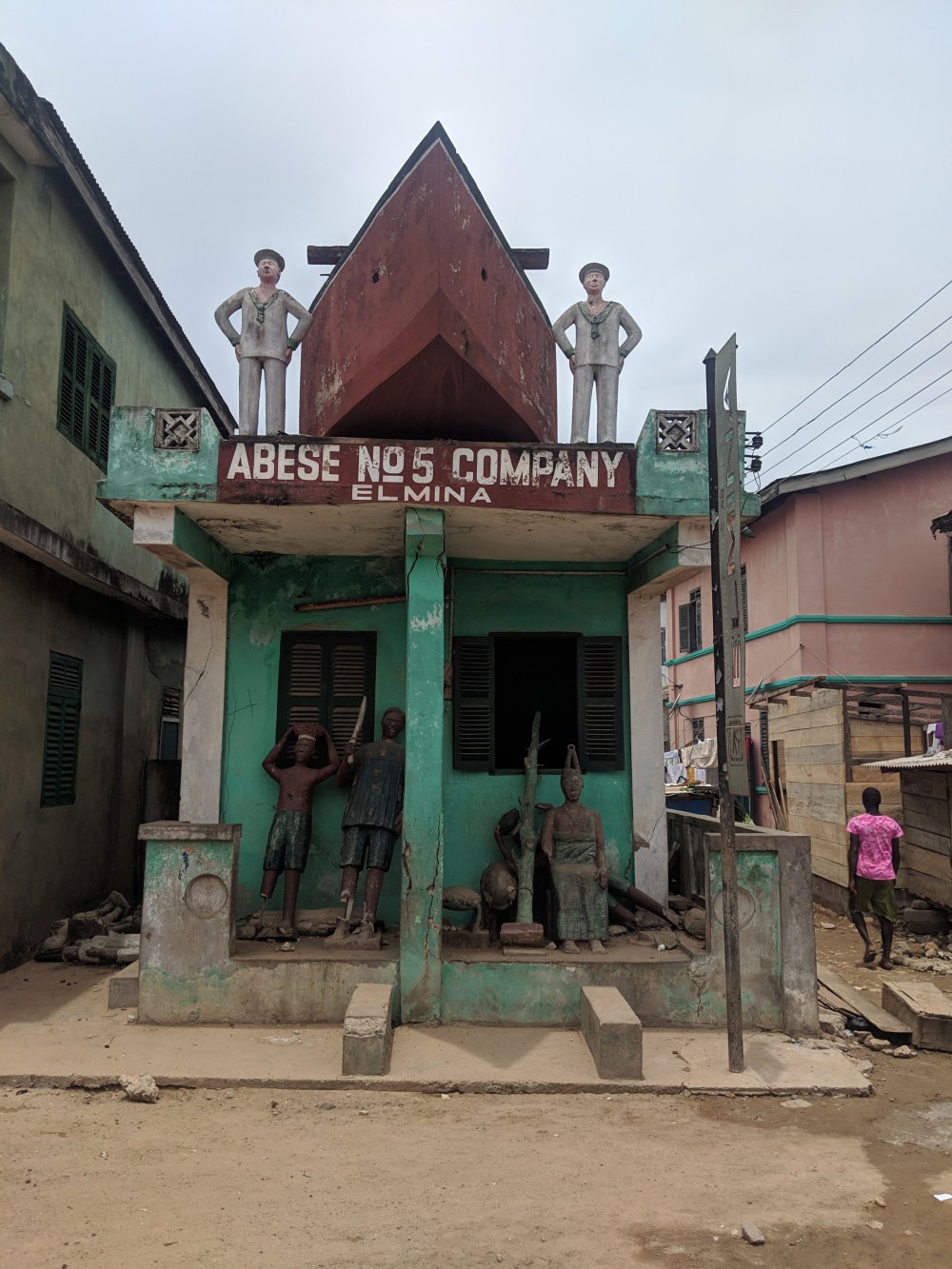
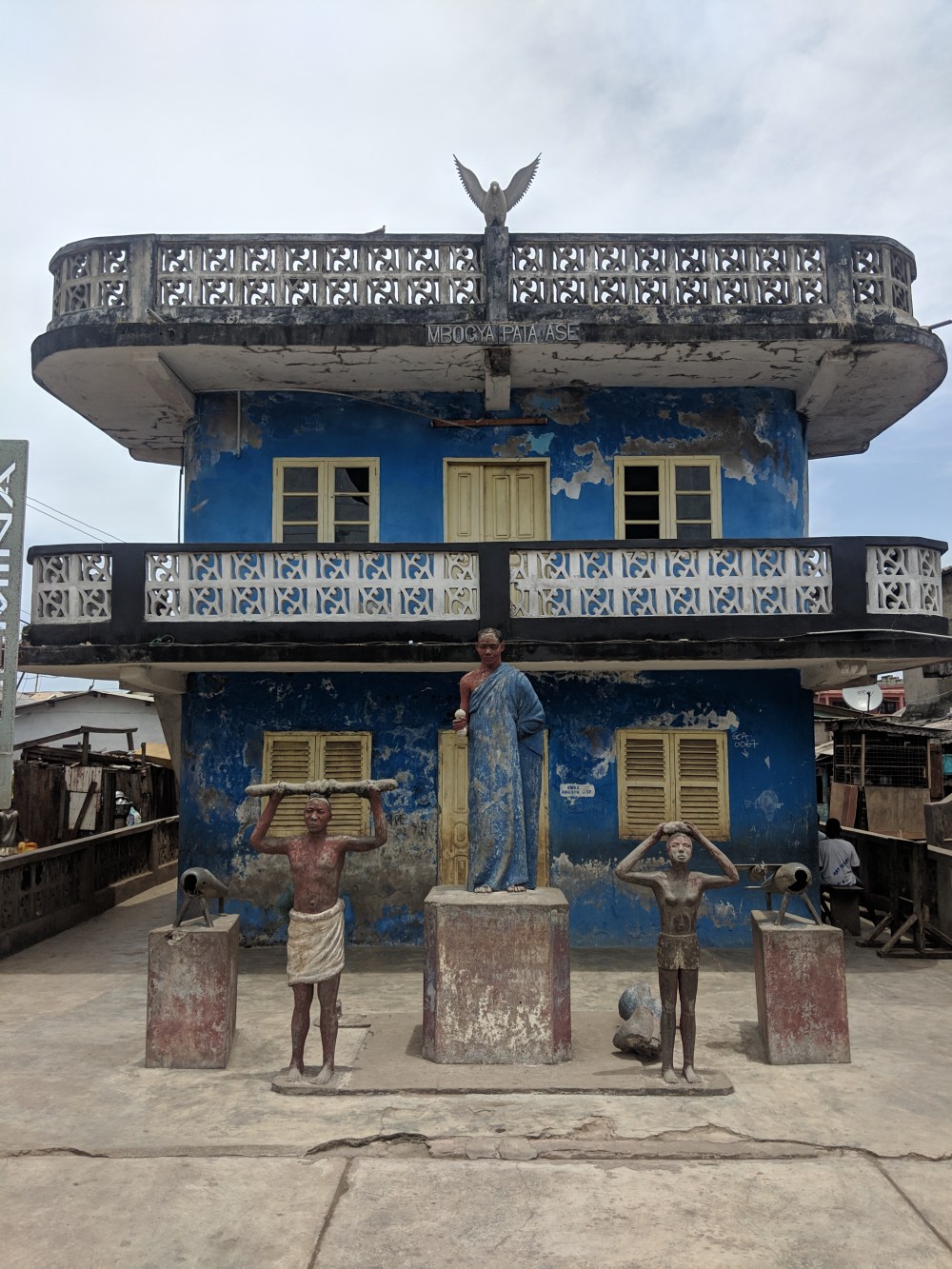
I walked down and around a hill on which another fort is built. There are some weird house shrines in town and I wanted to check them out.
On my way I passed a shop that was selling SIM cards and I bought yet another SIM card, the one of MTN network. Ah, the internet costs double of what AirtelTigo ask for but finally I’m on fast connection. Relief.
The weird shrine houses are weird, with human statues standing in front of them and sometimes an animal among them. Some of them are crumbling, some of them are behind bars so no good for pictures. But the stroll around Elmina is a nice one, the town lively, people friendly and curious. I remember reading “Segu” and there there is a claim that these towns were only built because of slave trade, that they wouldn’t exist or grow otherwise.
Back to Cape Coast, it took me a while to find transport. First I was waiting by the empty car for it to collect passengers but then I noticed a lot of cars passing by and I started asking around and I got into a small Suzuki. It was 3.50cedi to get back. There was a police checkpoint and the driver was reprimanded that his passenger didn’t have seatbelt fastened and that the driver squeezed three people into the back.
I got dropped somewhere in the middle of Cape Coast. I made my way towards the fort on foot, saw what looked like a Nigerian restaurant-bar, with Nigerian dishes in the menu. I’d return to it later. My favourite dish in Ghana is boiled yam with palava sauce but it’s often “unavailable” in restaurants.
In the pharmacy I finally managed to buy the purple gentian anti-septic.
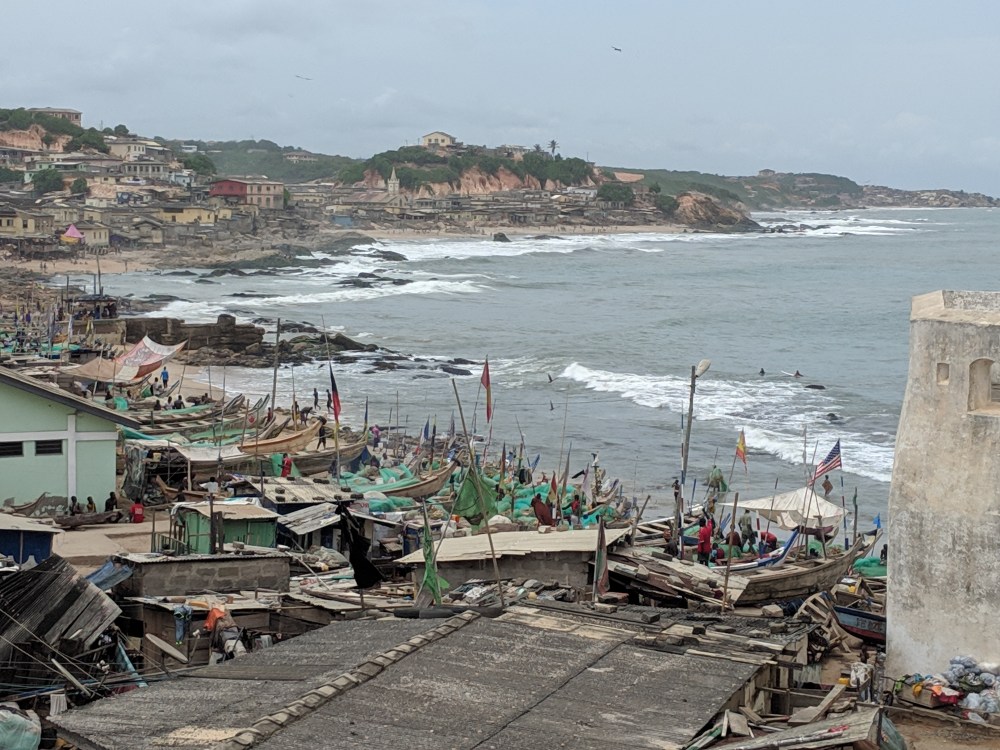
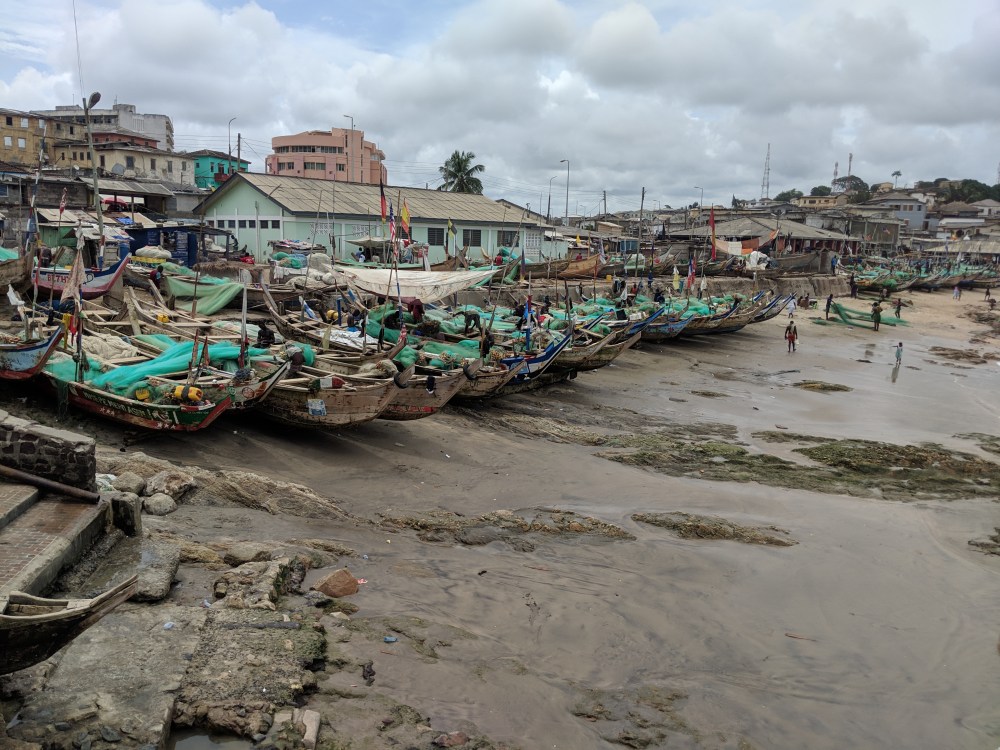
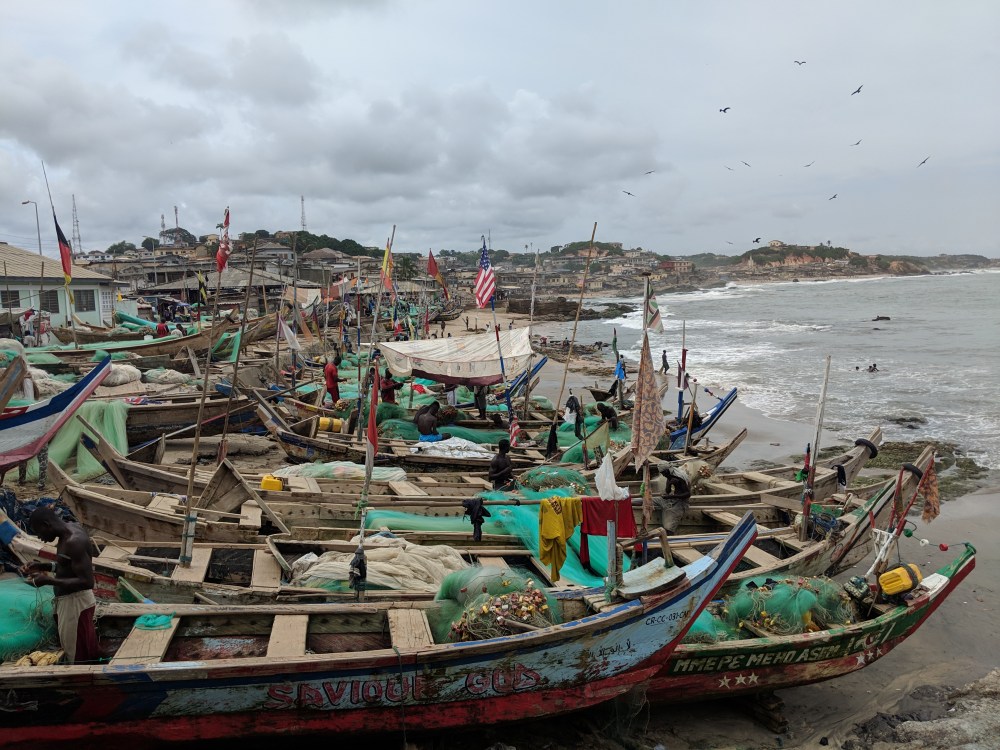
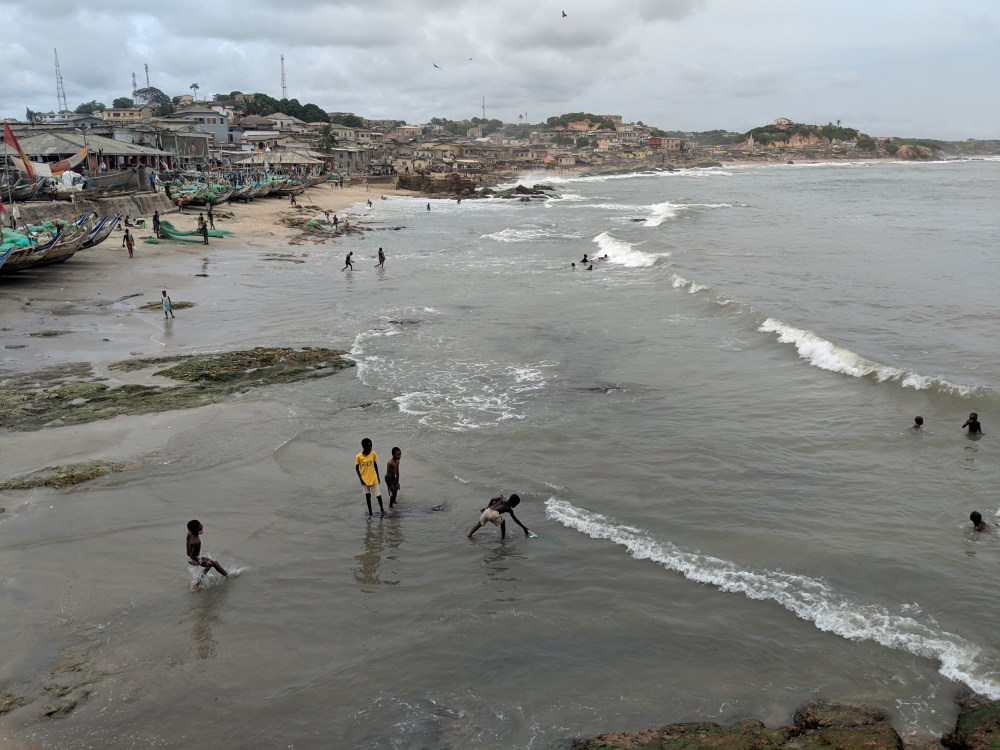
As one approaches Cape Coast fort, on the left side a quite spectacular panorama opens: waves crashing on shore, fishermen buildings and again boats. Pity the day was cloudy throughout, I even went to Elmina in the morning to have sun on the right side of the camera. I climbed a staircase outside the fort and snapped a pic, then a man showed me I can go down into the fisherman village and I did and I stood outside what in the fort is called “door of no return” through which the slaves were loaded onto the ships. The fort tours ask you to go through it and then you are to enter back to the fort in a sign of hope, a sign outside the gate reads “door of return”.
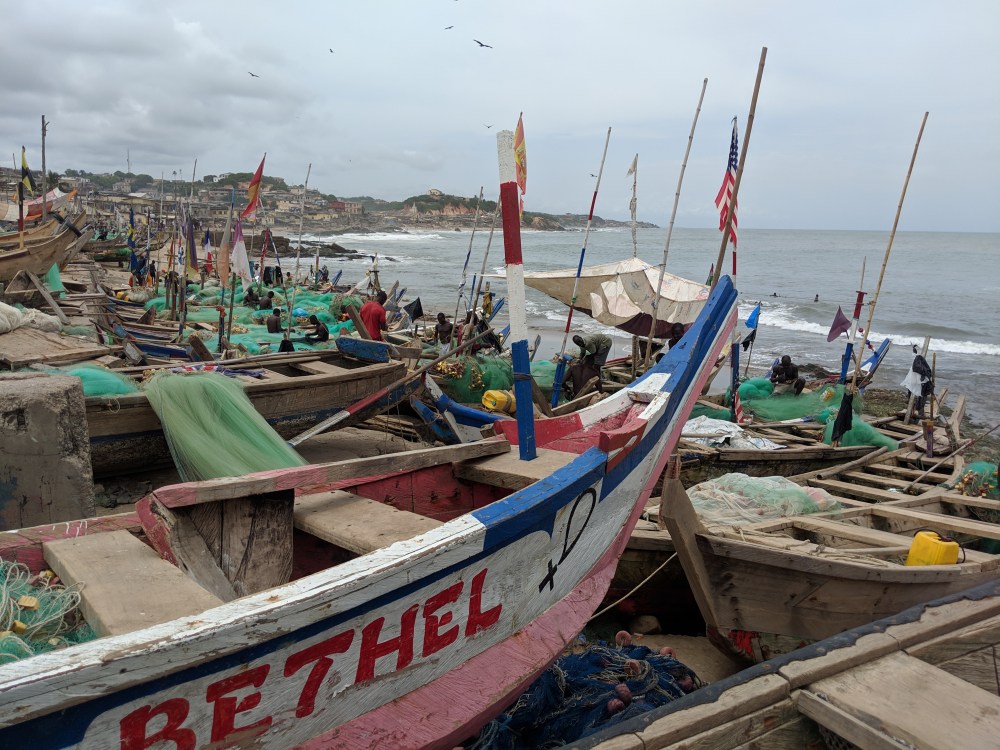
I was approached by a boy selling apparently his own paintings. They were quite nice if they really were his own. When I didn’t want to buy any, he changed his tune and started playing “I’m hungry” card. Quite a lot of children tried to do so around.
I walked back up to the road.
On the right side of the fort there is quite a nice beach. There is a Castle Restaurant, too, but the Bradt Guide somehow recommended another one, also on the beach. Orange Beach is a typical touristy joint that doesn’t look like it’s making it, that is it’s a bit overpriced, it’s empty, not well maintained and out of the menu almost nothing was available – although that’s quite common. I sat down anyway, ordered my 2nd favourite dish in Ghana, red red, which is baked beans. They normally come with fries plantain but I abhor plantain and I got it with plain rice. It took a while for the rasta man in the kitchen to cook it up and the dish was tasty but not spicy at all and it was very tomato. Normally it’s not like that.
In the meantime my white people count went up, there were 2 women on the beach and a German family of 3 came for a beer.
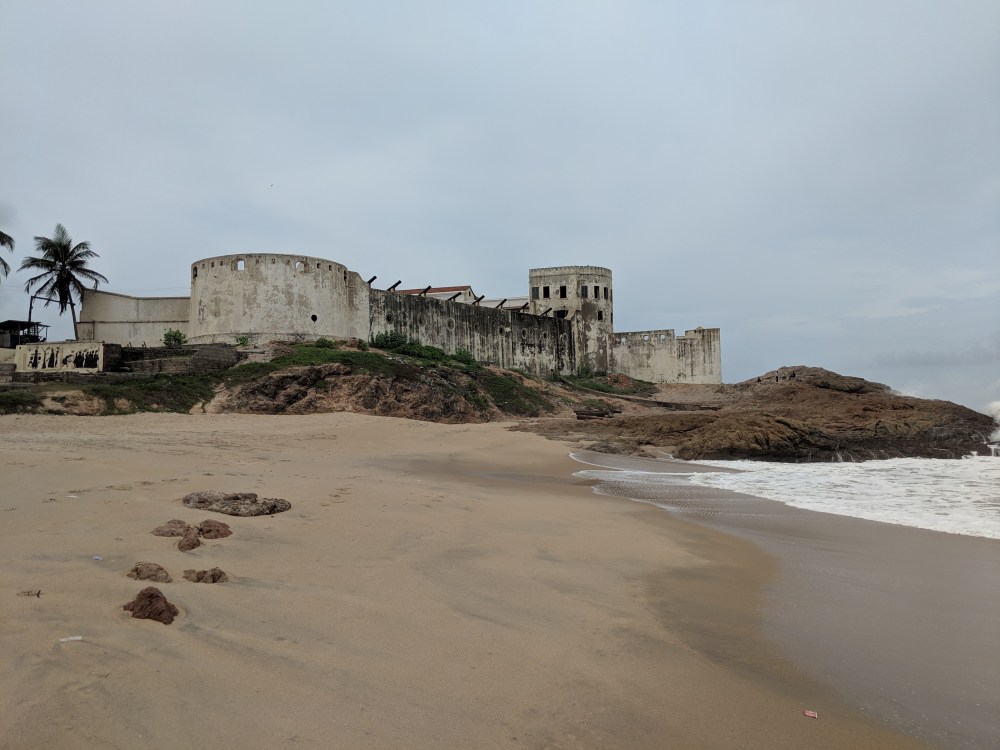
I walked baking the beach, which is short and full of signs saying “don’t swim”. The waves were powerful indeed. There was a “beach resort” at the end of the beach and that’s where my white people count went up to maybe 20. But the count has stopped and looks like the tourists stay in that resort and don’t venture into town. Pity.
I walked back to the guesthouse where I applied my newly acquired “ink” to the knee, managed to finish the book I struggled with for the past days. It’s “The devil that danced on the water: a daughter’s quest” and it’s a memoir of a woman brought up in Sierra Leone and her father, who got killed by Sierra Leone regime. The way the book was written was to my English eyes very untidy and I struggled to remember characters, understand timelines. Also I was surprised how much the author remembered being at age of 3.
In the evening I decided to take dinner in Lasgidi – the Nigerian bar. It was quite a walk back to town, I followed Google’s directions and they did lead me through some tiny and unpaved streets, people were even asked me where I was going. I made my way through and the bar was full – there was a football match on TV.
“What do you have to eat?” “What type of food do you want?” “Yan and palava sauce.” “We don’t have.” “You have pounded yam?” “We don’t have.” So much for choice. I ended up with jollof and chicken, which was unfortunately fried. The fresh salad came with ketchup and mayonnaise. There was also the particular type of Ghanaian pepper, shiito, which is flavoured with fish sauce and isn’t particulary spicy.
I walked back the main streets, a man came up to me saying he had a friend from Poland supporting his football club. I took a Guinness in a bar across the guesthouse. In the guesthouse the water stopped running.

 Coming back to Maman